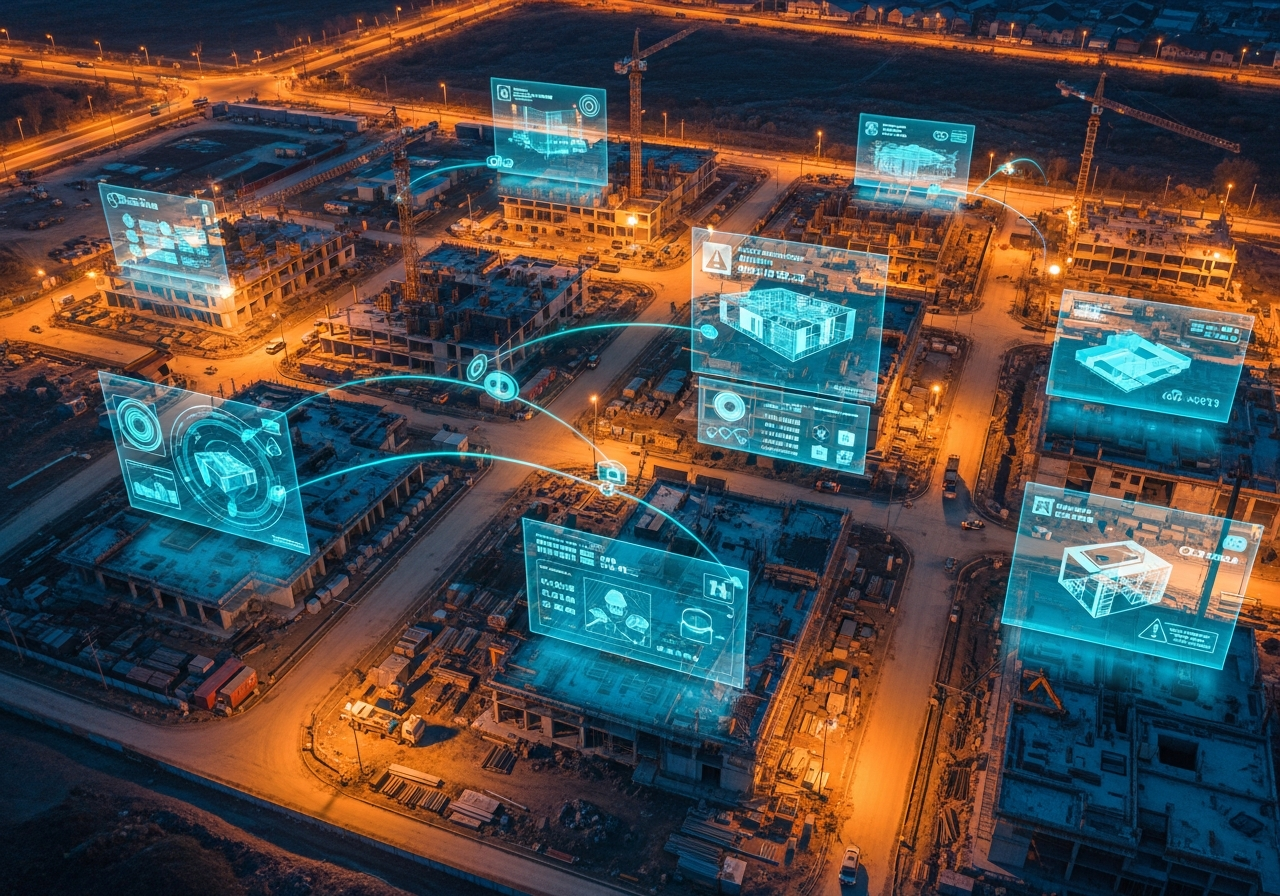
Key Highlights
Here are the key takeaways from this discussion:
-
Artificial intelligence is no longer a futuristic concept; it’s a practical tool for contractors today.
-
AI tools are revolutionizing project management by automating tasks and providing data-driven insights.
-
Construction software that incorporates AI helps streamline everything from bidding to site documentation.
-
Contractors who fail to adopt these technologies risk falling behind their more efficient competitors.
-
These AI solutions tackle major industry challenges like project delays, cost overruns, and safety risks.
Introduction
The construction industry is known for being slow to use new technology. Many people in this field stick to old ways that can make their work less good. But things are changing now. There are new AI tools that make contractors look at how they do their work. If you are open to change, artificial intelligence can give you an advantage. It can help by doing boring work, reducing mistakes, and giving you important information you could not get before. If you choose to ignore this change, you are putting your job at risk in the construction industry.
AI for Contractors
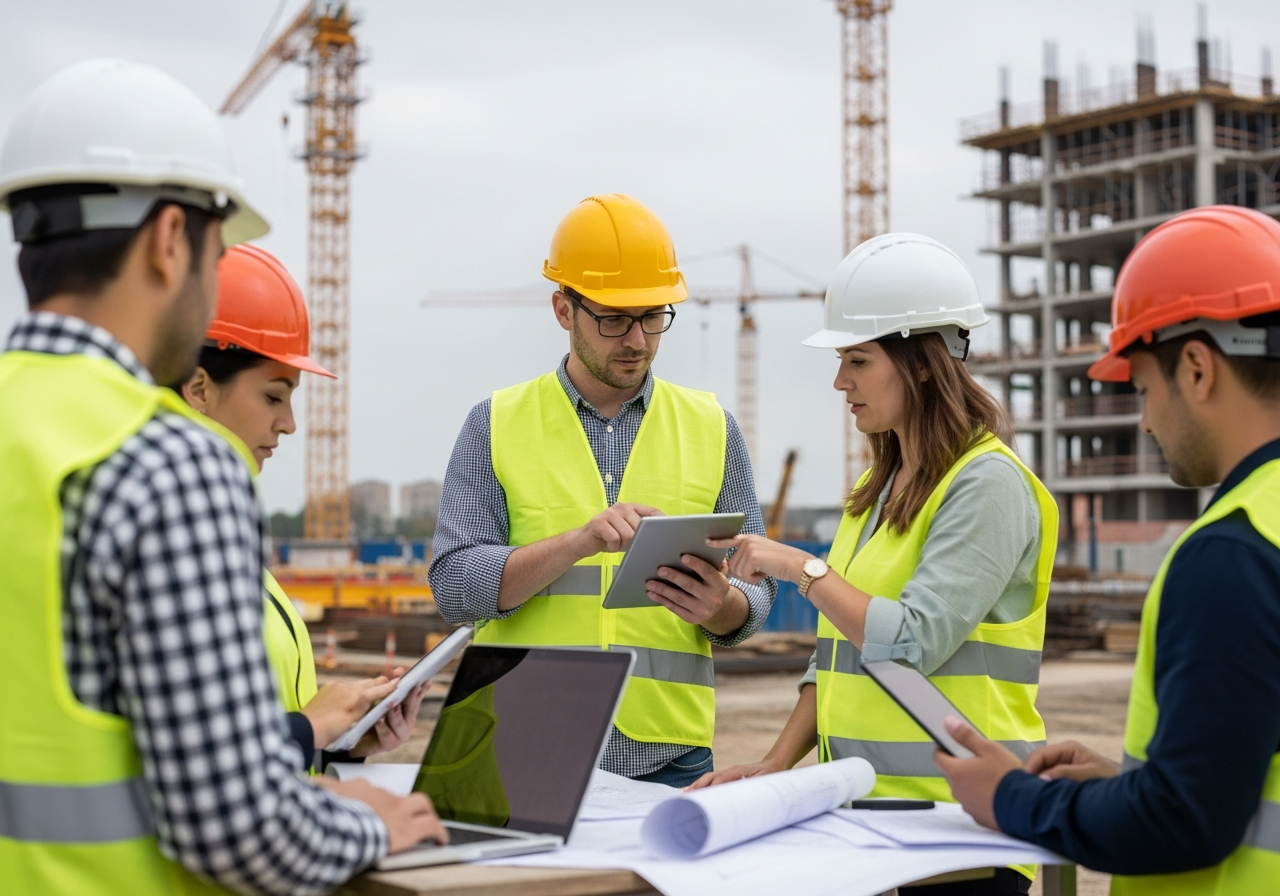 Here are some simple ways that AI is now used in the construction industry. Many general contractors are no longer just using regular software. Now, they are trying out new ai tools that help with big construction project management work. These tools do more than just hold digital files. They help teams in the building process in a smarter way.
A construction management platform now uses artificial intelligence to look at data, guess what might happen, and run some tasks by itself. These applications help with everything from setting up project schedules to watching over job sites. Because of this, the way teams start and finish projects is changing. Now, smarter and more data-driven decisions are part of the new way to work in construction project management.
1. AI-Driven Project Management Platforms
Many old ways of project management still use manual updates and keep information in different places. This often causes important details to be missed and can lead to expensive mistakes. AI-driven project management platforms solve this by keeping all project data in one place and using it to give helpful advice. These systems look at data from many sources to warn about risks, offer steps to fix problems, and guess which issues may come up before they get worse.
When project data is checked and sorted through by the system, it helps construction managers save time on work that repeats. So instead of spending long hours looking over papers and reports, managers can use their time for smart and big-picture choices. This lets contractors use AI and machine learning to make project management better, turning data into something helpful instead of just another problem.
Trusted tools like Procore and Autodesk Construction Cloud are made for managers working in construction. These platforms use machine learning to spot patterns in project data that often lead to delays or higher costs. With this help, teams can see problems early and act to keep their projects running well.
2. Automated Construction Scheduling Tools
Making real construction schedules for a construction project can be tough. There are a lot of things to think about, and project managers can’t keep track of all of them. Automated scheduling tools use AI to quickly run lots of “what-if” tests, doing in minutes what people would need weeks for. This kind of data analysis helps make sure everything goes in the best order and that resources are used well from the start.
Project managers really get a boost from this technology. Platforms like ALICE Technologies and NPlan use AI to build strong construction schedules using data from past jobs and current project needs. They do more than just make a plan—they check how strong that plan is by seeing what would happen if something goes wrong, like running out of supplies or delayed deliveries.
In the end, AI removes the guesswork from construction project planning and scheduling. It helps project managers know which path will be the best and shows any trouble before it can slow down the job. That means the work will go smoother, and there will be more control over time and outcomes.
3. AI-Powered Estimating and Takeoff Software
Manual takeoffs slow down the preconstruction phase. They often lead to mistakes and take up too much time. AI-powered takeoff software can help with this problem. It uses computer vision to quickly scan and measure the numbers from construction drawings. This makes the estimating process faster.
Contractors do not have to put in long hours doing manual data entry anymore. This gives them a better chance to win good jobs. Faster estimating lets your team spend more time working on bid plans and less time stuck with hard measurements.
So, does AI-powered takeoff software make estimating easier for contractors? Yes. By using these tools, you can skip the hardest part of the process. They help cut down on mistakes, boost the speed of the work, and let estimators get more bids done with better numbers. This gives your business a big edge over others.
4. Intelligent Risk Assessment and Mitigation Solutions
In the past, people would spot risks in a construction project only after something went wrong. Now, with ai tools, machine learning looks at project data and finds patterns that show when a problem might come up in the future. This is a much better way for risk management. It shows that using AI in a construction project does more than just save money.
These AI tools do more than point out risks. They rate them by looking at what could happen to the time and cost of your project. By using data from drawings, daily reports, and schedules, tools like Autodesk’s Construction IQ can highlight possible delays or quality problems. This means project managers can get early warnings.
When project managers get this information early, they can fix small problems before they get bigger. This way, they can avoid expensive fixes and missing key deadlines. Moving from waiting for problems to happen to being ready for them helps people know what to expect and protects how much profit you get in the end. It shows that AI helps the whole job, not just by cutting first-time costs.
5. Real-Time Progress Tracking with AI for Contractors
Depending on weekly reports for updates about construction progress is not helpful or up-to-date. AI-powered tools now give a real-time and fact-based look at how things are going on the site. They do this by checking what is built at the time against the full project plans. With help from 360-degree cameras and drones, tools like OpenSpace and Buildots can get a lot of pictures of the job site on their own.
The AI then studies this project data by looking at all the pictures. It checks how far work has gone when put next to the plan, and spots any problems right away. Construction teams now can have a simple, day-by-day timeline of what work has been finished. This removes fights about if work is done or not and helps everyone stay honest about their part.
Some AI tools for building sites only help with one job. These progress-tracking systems are better because they let you see all work going on in one place. They give one true record that can be trusted by the owner, contractors, and everyone working on the job. This helps all people see the same project data and work together well. This open way of working is important when you deal with hard projects and want to make sure the job goes forward the right way.
6. Smart Site Documentation and Reporting
Good site documentation is important when you want to prevent problems and handle a construction project well, but people are not always steady with it. Using smart document management and reporting tools can help. These AI tools will collect and organize important information about the project for you. This change helps construction professionals take care of daily reports and other records with ease. You get a solid digital record of what happens on site.
Now, instead of doing manual data entry for your daily reports, you can let AI tools log the important things. AI can track main events, keep an eye on weather conditions, and list the work done that day. Some trusted AI tools, such as OpenSpace, put Field Notes straight into your visual records. They connect any problems or notes to the right spot at the job site. This makes things clearer and helps you solve problems faster.
There are several ways this easy document management makes work better:
-
It gives you a complete, easy-to-search record of as-built conditions.
-
It makes creating daily reports easy and accurate.
-
It helps you show clear proof to settle issues.
-
It brings field and office teams together by improving communication.
7. Predictive Maintenance and Equipment Optimization
Unexpected equipment breakdowns can stop work on a job site. This can lead to expensive delays and push projects over budget. In the construction industry, predictive maintenance is a good way to use machine learning and AI to fight this problem. Instead of doing regular maintenance all the time, AI looks at data and tells you when construction tools or heavy machines might stop working.
The sensors on machines watch for changes in things like performance, heat, or movement. Then, AI checks this data to spot small problems before they get worse. With this help, you can plan maintenance before the machines break down. This keeps work on track and helps your machines last longer.
With more focus on equipment optimization, resources in the construction industry are used better. AI and machine learning can also look at how you use each tool and suggest the best one for the job. This helps you get better work, cut fuel use, and manage your tools in a good and simple way.
8. AI-Based Bid Preparation and Proposal Generation
Creating competitive bids and professional proposals is a time-intensive process that requires meticulous attention to detail. AI-based tools are streamlining bid preparation by automating the tedious aspects of the workflow, from scope analysis to document creation. This is particularly beneficial for small construction businesses that may lack large estimating teams.
These tools perform a “document crunch,” analyzing RFP requirements and historical project data to generate tailored proposals. For instance, an AI tool can match employee skills and past project experience to specific bid requirements, ensuring the proposal is as strong as possible. This frees up your team to focus on strategy rather than paperwork.
For small businesses, tools like Flowcase and Downtobid are recommended for their ability to level the playing field. They automate tasks that previously required significant manual effort.
|
AI Function |
Manual Task Replaced |
Benefit |
|---|---|---|
|
Scope Analysis |
Paging through plan sets |
Faster, more accurate bids |
|
Team Matching |
Searching resumes |
Stronger proposal content |
|
Template Population |
Manual data entry |
Reduced errors, faster submission |
Benefits of Using AI in Construction for Contractors
 Using ai tools is no longer just an extra for construction companies. Now, it is needed to help them keep going. The main reasons to use ai tools are to save time and make things more accurate. This leads to higher profits and gives companies a solid spot in the market.
But there is more to it than just saving money. AI brings better control over each project, helps make the worksite safer, and gives a way to make smarter choices. With these new tools, contractors do not have to wait for problems to show up. Instead, they can spot and handle issues early, before they slow down the job. Let’s look deeper at these time savings and other big advantages.
Enhanced Project Efficiency and Workflow Automation
One major impact of AI is how it helps project efficiency by making day-to-day work in construction faster through workflow automation. There are many repetitive tasks in construction, like typing in data or handling document management. These jobs use up a lot of time and can lead to mistakes. AI does these jobs quickly and right.
Contractors can use AI inside their construction management software. This use of AI makes project management better. For example, AI can sort and track RFIs and submittals automatically. It can also make daily reports from data at the site and send out reminders for items that need attention. With the help of automation, workers have more time to take care of important work.
When AI takes care of the tasks that need to get done every day, it helps staff think about bigger ideas for the project. This means teams have less dull work, can get more done faster, and their job can feel better. Skilled people get to spend their time and energy on the things that are most important.
Improved Accuracy in Estimating and Scheduling
Inaccurate estimates and schedules that are not realistic can often cause a project to fail. AI tools can make both estimating and scheduling better. They use data analysis to take away the guesswork. For project managers, this brings more reliable plans and helps lower the chances of surprises on the job.
For estimating, AI tools use computer vision to make faster estimating possible. They do takeoffs from digital plans fast and with a high level of accuracy. This helps reduce the risk of leaving things out or making errors, which can hurt profit margins. For scheduling, AI looks at historical data to build better timelines. It thinks about what tasks depend on each other and what risks may come up.
This kind of data-driven approach in construction management helps with both planning and scheduling. It makes a path that is real and doable. AI can simulate thousands of options. This gives project managers the best and most efficient schedule, making it more likely that projects finish on time and under budget.
Boosted Safety and Reduced Risk on Job Sites
A safe place to work means more work gets done, and AI now plays a big part in risk management. One major benefit of AI in the construction industry, besides saving money, is making jobs safer for people. With computer vision, AI can watch over a job site in real time and spot things that could be dangerous.
AI systems can see if workers have their personal protective equipment (PPE) on, notice when someone gets too close to heavy machines, or let people know about work zones that are not safe. If a problem shows up, an alert can go to the site boss right away, so safety problems can get fixed fast before something bad happens.
When you use AI for safety checks, you get non-stop monitoring that helps stick to safety rules all the time. This way of keeping an eye on things not only keeps people safe, but it also lowers money and legal trouble for construction companies. That’s very important for the construction industry.
Conclusion
To sum up, using AI is no longer an option for those in the construction industry. It is something you need if you want to keep up in a tough market. If you use AI tools, you can work faster on your projects. These tools help you be more right in your estimates, and they also help make the job site safer for everyone. The eight ways we talked about show just how much AI can change the way you work in this field. This new technology is growing fast, and being one of the first to use it will put you ahead of other companies. Don’t let your business slip. Reach out to us today to see how AI can change how you work for the better and help you find more success.
Frequently Asked Questions
How does AI-powered takeoff software help contractors with estimating?
AI-powered takeoff software uses computer vision to read blueprints. It can measure quantities for you, so you do not have to do the work by hand. These ai tools help people in construction finish their estimates faster and with more accuracy. This means they can bid on more projects with their construction software and have fewer expensive mistakes.
Is it difficult for contractors to integrate AI tools into their current workflows?
No, it does not have to be hard. Many new ai tools are made to be simple and easy to use. They also fit well with construction management software. Good vendors offer strong support when you start. This helps contractors bring these tools into their work fast, with little trouble and easy steps to learn.