
Key Highlights
-
AI-powered virtual assistants are changing how customer service works. They help answer questions fast and make things run better.
-
A main benefit of using artificial intelligence is that you can help people around the clock. This makes customer satisfaction much higher.
-
These tools cut down the wait for answers to common inquiries. They let your human agents focus on more complex issues.
-
Virtual assistants look at data analytics to give each customer a more personal experience. They also help to guess what customer needs might be next.
-
The best results come with a team that has both artificial intelligence and human agents working together.
-
Another big plus is that you can help more people as your business grows. You can do this without raising your costs by the same amount.
Introduction
The world of customer service is changing fast because of digital transformation. Now, businesses must keep up or get pushed out. People want quick and good support these days, so old ways do not work anymore. The use of artificial intelligence is needed if companies want to stay in the game. AI virtual assistants lead this change. They help busy support teams and unhappy customers. With their smart, fast, and flexible service, these virtual assistants give people what they want when it comes to customer expectations.
Evolution of Customer Service in the Digital Age
 The story of customer service shows how digital transformation is happening for everyone. People used to call and wait a long time to get help. Now, people want fast help and support from many channels at once. This change did not come from businesses. It happened because people have higher expectations. They want a smooth and easy customer experience now.
AI-powered assistants are changing how customers interact with businesses. These assistants are setting new standards for customer support. Companies are going to AI because they know that customer satisfaction is more important than ever. If they don’t use new ideas, they might fall behind. We will look at how customer service changed from older ways, how AI grew, and what people want that is pushing these changes.
Traditional Customer Support Channels
For many years, customer service used phone calls and emails. These ways often had long wait times and short business hours. Customers got stuck in lines for help, even for easy questions that did not need special skills. This slowed down service, used up company resources, and hurt customer satisfaction. All this happened before a real person even talked to the customer.
This system does not work well for today’s shopping. Human agents have skills but there are only so many of them. They spend time on simple questions like order status and returns. This keeps them from helping with the hard issues, where their care and fixes matter most. Support becomes slow and costly, and it doesn’t work well for people.
How do AI chatbots deal with customer queries compared to human agents? Human agents do give careful, personal help, but they are not as quick or always ready for basic jobs. This is why old customer service channels now use AI or are being replaced. New methods are needed to keep up with what customers expect from customer service.
The Rise of AI-Powered Virtual Assistants
Problems with old customer support made it clear that there was a need for something better. That’s where AI technology came in, especially in the form of virtual assistants. These aren’t the usual basic programs. They use artificial intelligence to understand and help with customer needs in ways that are very accurate.
Virtual assistants work using natural language processing. This means they don’t just look at words—they figure out what you mean when you ask a question. Because of this, they can help with many types of requests, from simple questions to trickier problems, and they don’t need a human agent involved right away. This change has been a big step forward for customer support.
So, what’s the main benefit of using AI chatbots in customer support? The biggest one is how fast and well they work. These virtual assistants can help with lots of questions at the same time, and they answer right away. That kind of service isn’t possible with only human agents. It helps customer support do more and also adds value instead of just being a cost.
Consumer Expectations Driving Innovation
People today are more demanding and have less patience. The way they use fast and easy digital tools every day has changed what they want from customer service. They want help from a support team that is as fast and simple to use as a ride-sharing app or a streaming service. This new customer behavior is the big reason why many are now turning to AI.
People do not want to wait for help during normal business hours. They want answers right away. So, how does AI improve customer satisfaction and the customer experience? It focuses on what really matters to people. Now, certain customer needs are not just nice to have—they are what most expect. These include:
-
24/7 Availability: People want to get help from customer service at any hour.
-
Instantaneous Responses: There should not be any long waits for easy questions.
-
Personalization: Each customer experience should feel special, based on their past needs and choices.
At the end of the day, companies are not just using AI because it is something new. They do it because they want to meet these higher customer expectations. If a business cannot offer quick and personal help, it knows customers will go with someone else who does. The support team must use AI if they want to keep up, as customer satisfaction depends on it.
What Are AI-Powered Virtual Assistants?
An AI-powered virtual assistant is software that helps with tasks and answers questions that usually need human intelligence. It uses artificial intelligence, machine learning, and generative ai to do more than basic chatbots. This kind of ai agent learns from talking with you, understands the situation, and gives good answers, especially in customer support.
What is the difference between ai chatbots and virtual assistants in customer support? The main thing is what they can do. A chatbot often follows a set script. A virtual assistant uses its skills to understand complicated requests. It can work with business systems and give full answers. The next parts show their main features and talk about the technology they use.
Key Features Distinguishing AI Virtual Assistants
AI virtual assistants are much more than just chatbots. They use powerful features that help them talk and work in smart ways. These systems can understand, learn, and change as needed, so they are better than old systems that had simple rules. AI agents can help with plenty of customer questions, not only the ones that are set up in advance.
How do AI-powered virtual assistants make customer service smoother? It is because they use technology that lets them work on their own a lot of the time. Some important features the virtual agents use are:
-
Natural Language Processing (NLP): The system can know what a person means and feels in their words, and not just listen for certain keywords.
-
Machine Learning: The AI agents get better with every chat by remembering things and using that to give better answers as time goes on.
-
Contextual Awareness: The assistant keeps track of what the talk is about, so it can help across steps in a clear way.
-
Generative AI: The system can make up new answers that fit each chat and are useful, because it learns from a big knowledge base, not just from scripts.
These tools let AI virtual assistants handle tough and new tasks. That makes customer service faster and easier for people.
Differences Between AI Chatbots and Virtual Assistants
It is a common mistake to use the terms “AI chatbot” and “virtual assistant” interchangeably. While both tools facilitate customer inquiries, their capabilities and underlying technologies are fundamentally different. AI chatbots are often designed for simpler, more direct interactions, handling routine tasks with pre-defined conversational flows.
In contrast, virtual assistants are built for complexity. They leverage advanced AI to manage multi-step problems, integrate with backend systems, and offer personalized solutions. What is the difference between AI chatbots and virtual assistants in customer support? A virtual assistant is a strategic partner in problem-solving, whereas a chatbot is more of a first-line-of-defense tool.
The core distinctions can be summarized clearly.
|
Feature |
AI Chatbots |
AI Virtual Assistants |
|---|---|---|
|
Task Complexity |
Best for routine tasks and FAQs |
Can handle complex issues and multi-step processes |
|
Intelligence |
Often rule-based or basic NLP |
Advanced AI, machine learning, and contextual understanding |
|
Interaction Style |
Typically reactive and scripted |
Conversational, predictive, and can take initiative |
|
System Integration |
Limited or no integration with other business systems |
Deep integration with CRMs, databases, and other software |
Core Technologies: Natural Language Processing and Machine Learning
The intelligence of AI virtual assistants does not come from magic. It comes from core tools like Natural Language Processing (NLP) and machine learning. NLP helps these virtual assistants understand human language. This includes text and speech recognition. It lets them pick up on intent, feeling, and context. As a result, they don’t just follow set commands. They can have smooth conversations.
Machine learning works with NLP. It lets the virtual assistant get better with time. Each time you use the assistant, it learns more. The system uses what it learns to improve answers. This makes responses more clear and useful. Large language models are very good at creating text that sounds just like it was written by people.
What can AI virtual assistants do in customer service? With these tools, they can help with a lot of tasks. They can answer questions about a product, find order status, and guide people through steps to fix something. They can even help with product returns. They do all of this by understanding natural language and talking like a person.
Benefits of AI-Powered Virtual Assistants in Customer Service
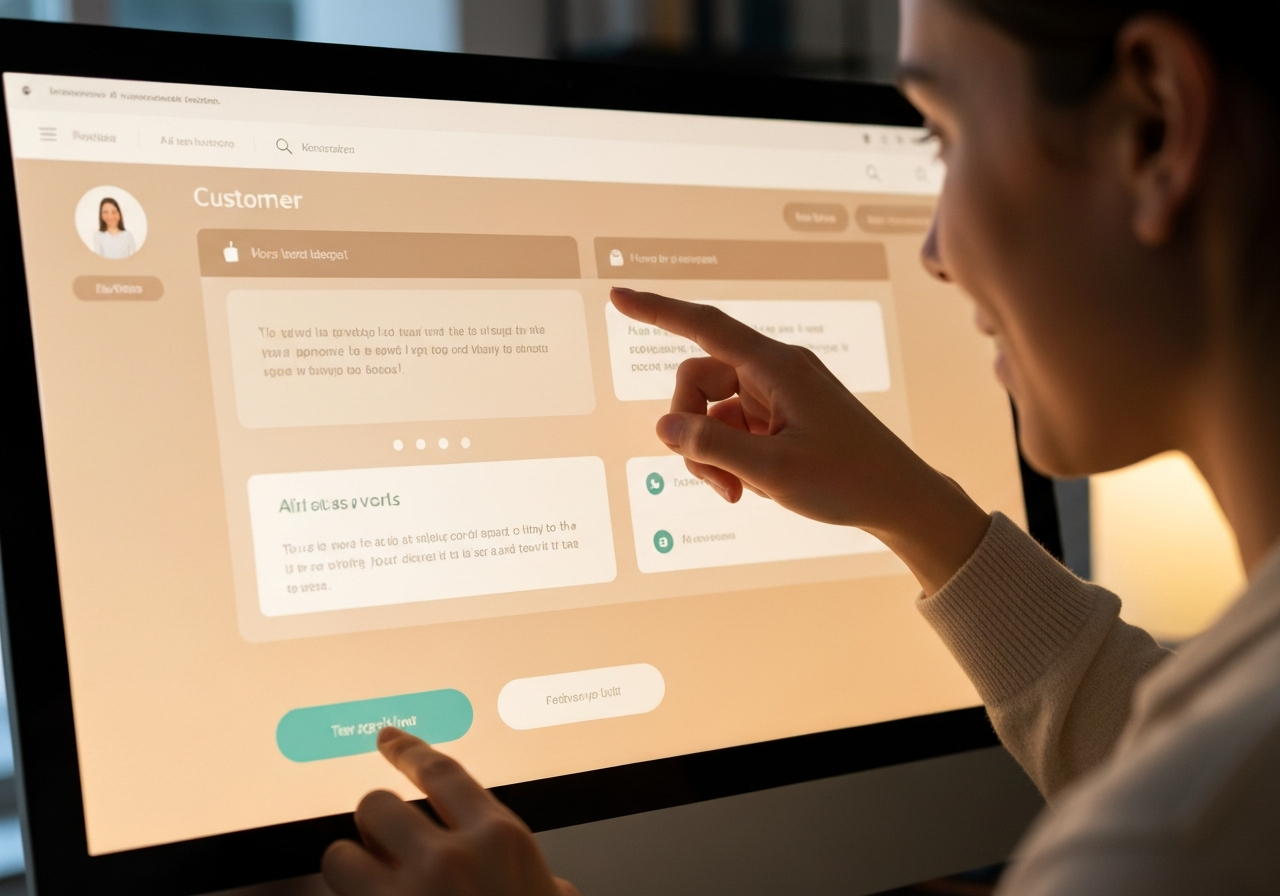 Bringing AI-powered virtual assistants into customer service helps a business in many ways. These tools make work faster, better, and more personal, which leads to happier customers and a lot of cost savings.
With AI, it is not just about cutting costs. It is also about building a much better way to help people. AI changes customer support to fit the needs and wants people have today. In the sections below, you will see more of the benefits of AI for customer service. Some big plus points are faster answers, help at any time, easy growth when there are more customers, and personal care for each person. All these help customer satisfaction and save money in your customer service operations while meeting customer expectations.
Enhanced Response Time and Accuracy
Speed matters a lot in customer service. Long wait times are one of the main reasons people get upset. AI virtual assistants help fix this by giving quick answers. How do they make response times better? They can handle many customer queries at the same time, so there are no lines or wait times. This means people get support right away, and human agents can’t always do that.
Speed isn’t the only thing that AI virtual assistants offer. They have a single source where they get and update information. So, they give the right answers all the time. It is tough for human agents to do this because each worker might not know the same things.
This helps in two big ways. First, customers get the right info fast. Second, support teams do not need to answer the same easy questions again and again. There are some main things that come from this:
-
Instantaneous Replies: There are faster responses to easy questions about orders, returns, and product information.
-
Reduced Agent Workload: When AI handles simple customer queries, human agents can focus on harder problems.
This change helps people get help faster and makes work easier for support teams. Also, it leads to fewer wait times, less customer frustration, and more accurate responses from your knowledge base.
24/7 Availability Across Digital Channels
A big problem with regular customer support is that it works only during normal business hours. But customer needs do not follow a 9-to-5 time. Virtual assistants powered by AI fix this by giving 24/7 support. This means help is there at any moment, day or night.
Always being available is a must for global businesses and for meeting today’s customer expectations. They want support when they need it, not just when you are open. Can virtual assistants that use AI help across different digital channels? Yes, they can. These ai agents work on your company’s website, in your mobile app, on social media, and on messaging platforms.
Because they can be everywhere, customers can start a chat on Facebook Messenger, keep talking on the company website, and still get the same help every time. This keeps customer support strong no matter when or where people reach out. It makes your customers trust your brand more by being there for all their customer inquiries on every digital channel.
Scalability for Growing Businesses
For any growing business, scaling customer support can be a real problem. If you hire more human agents to take on more questions from customers, your operational costs will go up fast. AI technology is a better way to control these costs and is easier to use as your business gets bigger.
So, how do AI-powered virtual assistants help make customer service work better? They are easy to scale. One AI virtual assistant can talk to thousands of people at the same time. To do this with human agents, you would need to hire a huge team. This lets you give great customer support to more people without having to hire more staff. That means you save a lot of money.
When you have peak times like during a holiday or right as a new product launches, more people will contact you. Thanks to AI technology, you do not have to keep customers waiting or put too much pressure on your team. AI can handle this extra work without breaking a sweat. This lets you give good customer service all the time while cutting costs and not overworking anyone.
Personalized User Experiences
Generic support that fits every customer is not effective anymore. People want help that understands their history and what they like. AI-powered virtual assistants use data analytics to give customers this one-on-one experience.
AI-powered assistants change the way customers interact with businesses. They look at past purchases, what you have browsed, and earlier support tickets. This helps the assistant to give custom answers and make better product recommendations. For example, they can tell you about products you might like. They can also help you fix problems with things you own, guiding you step by step.
This kind of personal approach helps make customer engagement stronger and more natural. It also makes support easier and more helpful. Instead of just answering questions, AI makes customer service personal and valuable. It shows that the assistant knows your behavior and understands what you need.
Efficiency Gains Through AI in Customer Support
 The most clear change that AI brings to customer support is how it helps things go faster. Now, AI can take care of jobs that be simple and take a lot of time. this makes customer service operations better and lets businesses get more done with less work. This rise in operational efficiency is not only a matter of speed. It also helps improve the whole support system.
When the routine tasks be automated, human agents get the time to spend on important things. They use their skills to fix tough problems and connect with customers. The next parts explain how AI does this. It can answer questions, make problem solving smooth, and give data that helps teams get better at their work all the time.
Automating Routine Customer Queries
A big part of a support team’s day goes to answering the same questions from customers again and again. This the be both slow and make agents feel bored, especially when they have the skill to do more. AI virtual assistants help by handling most of these repetitive tasks. They give quick and clear answers to repeat questions without human intervention.
When this work moves to automation, the support team get more time to focus on hard problems that need empathy and good thinking. So, what can AI virtual assistants do for customer service? There be a long list of things, and the list keep growing as technology get better.
Some of the most common customer queries that are automated include:
-
Order Status and Tracking: Telling the customer in real time where their package is.
-
Password Resets and Account Management: Helping users to manage their accounts and reset passwords.
-
Frequently Asked Questions (FAQs): Answering basic questions about the store, product details, or rules.
Streamlining Complex Problem Resolution
AI is great at handling routine tasks. But, it does more than answer simple questions. For complex issues, ai technology works as a strong helper for human agents. It helps make solving problems much quicker. The AI can be the first contact for a customer, and it collects the important details before anything needs human intervention.
If a question gets passed to a human, the AI gives that agent a clear summary of the chat. It also shares customer history and helpful, data-driven tips. This gets the human agent ready to solve the problem fast and in a better way. So, the customer does not have to repeat their story.
How do AI chatbots work with customer queries compared to human agents? In this kind of system, AI does not have to do everything. It takes care of collecting the facts and finding out what the issue might be. The human agent jumps in for advanced thinking and to show care that only a real person can give. Both work together to create a highly efficient workflow.
Data-Driven Insights for Continuous Improvement
One of the easiest ways for AI to help in customer service is by gathering and looking at a lot of data. Each time someone uses customer service, it adds to the data. AI can look at this information and find valuable insights that people would not spot on their own. Having this data matters a lot for making constant improvements.
What does AI do for customer satisfaction during service? It sets up a feedback loop. By checking customer feedback, looking for patterns, and spotting usual problems, businesses can see where there are weak spots in products, services, or in how they help customers. Using predictive analytics, companies can even look ahead and spot customer needs or problems before they become bigger.
Companies that use this data-driven plan make better choices. They don’t have to guess what customers want. They use the data from AI to carefully tackle pain points and make their customer experience better, step by step. This helps boost the overall customer experience and meet customer needs with real, usable information.
Handling Customer Interactions: AI vs Human Agents
 The talk about AI in customer support often makes it sound like the technology and human agents are fighting each other. This way of thinking is not helpful. The real plan should not be about one replacing the other, but about making the system work better. AI can be quick and handle data fast, but human agents are important for showing care and truly understanding when people are upset. Technology cannot do that.
To build a good support system, it’s smart to mix automation and human help. Knowing what each does best helps us make customer support that is both fast and caring. Up next, you will see a look at how both help with managing the number of questions, cutting down wait times, and working together to give great service.
Managing High-Volume Inquiries
AI technology is much better than people when it comes to handling large numbers of requests. A person on a customer service team can talk with just one person at a time. When there are a lot of customer requests, this becomes a problem right away. It leads to long wait times and many people stop asking for help. This can make customer satisfaction go down.
So, how do AI-powered virtual assistants help customer service teams do better? They remove this problem. AI can chat with thousands of people at once. There is no drop in how well the AI works. That means everyone gets a quick answer, even if a lot of people reach out at once.
This is not just easier for people, but it also helps with operational costs. Getting more people in for busy days costs a lot and does not help when things slow down. With AI, you can scale up or down as needed. This keeps your costs in check and helps make sure customer issues are solved fast. So, with AI technology and virtual assistants, you can improve customer service, lower wait times, raise customer satisfaction, and manage costs in a better way.
Reducing Wait Times and Friction
Nothing messes up the customer experience like making people wait. It does not matter if a person is stuck on hold or has to wait hours for someone to answer an email. When there is slow support, it leads to customer frustration. AI virtual assistants help get rid of these long wait times.
So, how do AI virtual assistants help improve response times in customer service? They are quick to give instant answers to many types of questions. This means customers do not have to wait long. The people with simple problems get what they need right away. This makes their customer experience better. It also helps the queue move faster for those with more complex issues.
When there is less waiting, customers are happier with the service. The main benefits of using virtual assistants are:
-
Immediate Acknowledgment: Every customer is greeted right away. This helps make them feel noticed and valued.
-
Quick Resolution of Simple Issues: Customers with easy requests do not have to wait for a real person to step in.
-
Shorter Queues for Complex Problems: With virtual assistants handling routine problems, people who have complex issues can be helped by an agent sooner.
Human-AI Collaboration for Exceptional Service
The best customer service does not pick between AI and people. It uses both together. The right way is to have ai technology and human agents work as a team. Each one does what it does best. This creates a service that is fast and feels real at the same time.
In this setup, AI is the first to help. It answers routine inquiries and collects key details from people. How do businesses get ai technology to work in customer service? They set up clear steps for when to move a problem to a person. If an issue gets too hard, or if customers look upset, the AI hands the chat to human agents. It shares all the right info with them, too.
This makes sure the human intervention is used only when needed. It is for times when you need care, a new idea, or to grow a bond. This is one of the most important best practices for support today. When AI does the simple work, human agents can spend more time building good customer service and strong ties with the people they help.
Integrating AI Virtual Assistants Across Platforms
For virtual assistants to work well, they need to be where your customers are. If you use a chatbot on just one webpage, it’s not enough because people use more than one digital channel today. You should set up your virtual assistants across all the right places to give people a smooth experience no matter where they meet your brand.
Still, putting virtual assistants on many digital channels can lead to challenges. You need to handle customer data the right way. This means keeping things steady, making sure everything is secure, and protecting data privacy on every channel. Doing this well helps people trust you and keeps you following the rules. The next parts will show how you can do this the right way.
Omnichannel Support: Messaging Apps, Websites, Social Media
To reach customers where they are, your support needs to be on many digital channels. An omnichannel plan lets a customer start talking on one platform. They can then continue on another without losing track or repeating information. AI virtual assistants are great for doing this.
Can AI-powered virtual assistants work on different digital channels? Yes, they do this very well. These virtual assistants can be set up in places customers visit often. This gives your customers a steady and easy way to get support. It helps raise customer engagement and makes it simpler for people to get help.
Key platforms for omnichannel AI support are:
-
Websites and Mobile Apps: Give instant help when people look around or shop.
-
Messaging Apps: Talk with customers using apps like Facebook Messenger or WhatsApp.
-
Social Media: Answer questions and solve problems, either in public or in private, on sites like Twitter and Instagram.
Ensuring Consistency in Cross-Channel Communication
An omnichannel presence does not help if the information in your digital channels does not match. A customer who gets one answer on your website and a different one on social media will not trust your brand. The brand needs to have consistency for a good customer experience.
AI-powered assistants change customer interactions with businesses in a big way. They keep knowledge in one place. By using a single knowledge base, an AI virtual assistant gives the same product information, policy details, and troubleshooting steps every time. It does not matter if the customer reaches out by web chat, messaging app, or smart speaker.
This setup makes sure each customer always gets the correct information. People trust what they hear and their customer experience improves. They know they can use any of your brand’s official support channels and get answers they need, without confusion.
Security and Privacy Considerations in Multichannel AI Deployments
When you use AI virtual assistants on different channels, keeping customer data safe is very important. Each channel can bring new security risks. You need to protect any sensitive information in your system. If someone gets into your data, you might lose the trust of customers. Plus, you could face big money losses and possible legal trouble.
If you work in financial services, healthcare, or any field with private data, you must focus on security from the start. The best way to lower the risk of potential issues is to use good security practices. This helps stop people from getting into your customer data without permission.
Key things to think about with security and data privacy:
-
Data Encryption: Make sure all customer data is encrypted when you send it or store it.
-
Authentication and Access Control: Check user identities. Let only the right people access customer data.
-
Compliance with Regulations: Follow laws like GDPR and CCPA to meet rules and avoid legal problems.
Implementing AI in Customer Service Workflows
Knowing the benefits of AI is good, but putting it to use is not always easy. If you do not have a clear plan, AI can create problems instead of fixing them. You need a step-by-step way to add AI to your customer service. This helps you get the most out of it and stops things from going sideways.
To make AI work in your customer service, you need to do more than just pick some tool. You have to know what you want from it, like which use cases to focus on and what goals to set. It is also important to train your support team right and guide everyone through the changes at work. These next parts will show you the best way to add AI and get the benefits for all.
Key Steps to Successful AI Integration
Getting AI to work well in your company is not about jumping on the latest tech right away. You need to take your time and follow a plan that helps the business reach its goals, mainly to make customer service better.
You should start by looking at how you do things now. Find out what problems happen most and see which issues AI can really help fix. Set targets, like making reply times shorter by a given amount. Set a clear goal so you can tell if the changes are working later. It is important to make a simple plan so the whole process goes well.
If you want to get the most from your AI and boost operational efficiency, be sure to keep to these best practices and improve your customer service operations:
-
Assess Business Needs: Look into your support data. See the best ways where AI can help.
-
Choose the Right Tools: Get an AI tool that meets what you want, works with your budget, and fits in with what you already use.
-
Develop a Detailed Plan: Write down the time it will take, what you need, and the main points you want to hit when putting AI in place.
-
Integrate and Test: Make sure the AI fits well with your CRM and other tools before you go live with it.
Training Teams and Managing Change
Putting new AI technology in place is not only about the technical side. It is also about people. The support team needs to get ready for changes in how they work and what they do every day. If there is no good training and help with change, the team might not like the switch or use the tools in the right way. This hurts the whole project.
Training is about more than knowing how to work with new tools. It is also about learning how the support team can work with AI together. Agents should know when the AI should fix a problem and when they need to step in for the complex issues. This means agents move from fixing every problem by themselves to handling the hard cases that AI can’t solve.
How do businesses use AI in their customer service to get better results? They put time and money into their people. Companies train their support teams well, make sure help is always available, and show the team why this ai technology is good for both people and the company. These steps help teams adjust, work better, and give a better customer service experience for everyone.
Conclusion
AI-powered virtual assistants are changing how customer service works. They make it more fast and easy to get quick and accurate responses to all customer inquiries. Because of these tools, businesses can grow without losing the quality of what they give. Virtual assistants are always available, day or night. This helps you meet the needs of people who want support any time.
The mix of AI and human help lets you get a more personalized and steady experience across all platforms. That means the user feels like you know what they want, and you respond the same way every time. Today, to keep up with others in the digital world, it is not just a good idea to use these new ways in your customer service. It is needed to stay in the game. Don’t wait to use AI to make your customer service better. Get a free consultation and see how you can use these strong tools right now.