
Key Highlights
-
Stop wasting money on new leads when your CRM is a goldmine of dormant leads waiting for revival.
-
A systematic lead revival process can turn your 2025 waste into your most profitable revenue stream for 2026.
-
Automated email campaigns and SMS workflows are critical for re-engaging contacts at the right time.
-
Your sales team is likely abandoning leads too early; a structured revival strategy corrects this systemic failure.
-
Measuring revival revenue as a key performance indicator is essential for understanding the true ROI of your marketing spend.
-
Automation and segmentation are the keys to scaling outreach and increasing your conversion rate without overwhelming your sales team.
Introduction
Your sales funnel might be broken and made for a past world. You spend a lot on lead generation, but many of the people you get end up cold. They just sit in your CRM and get forgotten. This is not just a missed chance. It’s a problem with how your system works, and it costs you money every quarter. Instead of always going after new leads, it is time to try revival campaigns. These can bring back the old prospects you already paid for. This can turn your lead database from a graveyard into a steady source of income.
Understanding Lead Revival in Sales and Marketing
 Lead revival is when you try to bring back dormant leads in your lead database. The sales team often calls these leads “cold” or “closed-lost.” But that does not mean the leads cannot buy. They just were not ready to do it when you wanted them to. Right now, your sales process may step over these contacts, but they still hold a lot of value for your pipeline.
Instead of forgetting about these good contacts, a revival plan helps your team warm them up and get them back into the sales funnel. You want to find out why they went cold and use smart outreach to start talking to them again.
Defining Lead Revival and Why It’s Crucial
Lead revival in sales and marketing means you try to reach out again to people who showed interest in the past but stopped responding. This is not the same as lead generation, where you look for new contacts. Revival is all about working with old leads in your CRM. You have already put in time and money to get these leads, so they are much more valuable than brand new ones.
This process matters because most B2B buyers need 6 to 18 months before they make a choice. The usual sales methods give up too fast. If you just mark a lead as “closed-lost,” that does not mean they are gone for good. It means they are just thinking it over for a longer time. Without a plan to bring them back, you let those future customers slip away. Your competition will end up following up with them instead.
When you use a good revival strategy, your CRM becomes more than a list of contacts. It turns into a pipeline that keeps bringing in warm chances to sell. This can help lower your costs to get customers, and give you an edge over other businesses.
Common Reasons Leads Go Cold
Leads don’t often go cold because they stop caring about your business all at once. Most of the time, it’s just not the right moment for them. If your sales team comes on strong right after first contact, it might feel too much to the person you are reaching out to if they are not ready. This can lead to no replies. The sales team, looking to get new jobs and wins, may choose to focus on other people instead.
In B2B sales, there are many things that the sales team can’t control. There are trigger events like a company changing its focus or when the main person in charge switches roles. Sometimes, the money they were using for buying things gets put on hold. When these things happen, it does not mean you lost the fight. It means things are just going to take longer for now.
Here are some common reasons for a lead to go cold:
-
Bad Timing: The person is busy with other work, and your answer is not what they want right now.
-
Budget Delays: The company didn’t get the money they hoped for or they moved that money somewhere else.
-
Organizational Changes: The person who made choices about what to buy left the company or changed jobs.
-
Competitive Evaluation: They are still looking at what others have to offer, so your team is just one pick out of many possible choices.
The Value of Dormant Leads in Your CRM
Many people have thousands of dormant leads sitting in the CRM. Your sales team may have given up on these leads. You may think they are a waste. But they can actually be a hidden goldmine for the business. Since these contacts know your brand and your value proposition, and because they were once a good fit, they are much more important than a list of fresh leads.
Bringing back these dormant contacts is one of the most profitable things a business can do. It does not cost much to re-engage them—maybe just a few emails or text messages. This is less expensive compared to what you pay to get new leads. When you talk to these people again, conversion rates are much better. You start a warm chat instead of a cold one.
Do not let your CRM be a graveyard. If you use a good revival plan, these “dead” contacts can become a top profitable revenue stream. Now is the time for your sales team to work with this part of the CRM and get the value from it.
The Benefits of Automated Lead Revival Workflows
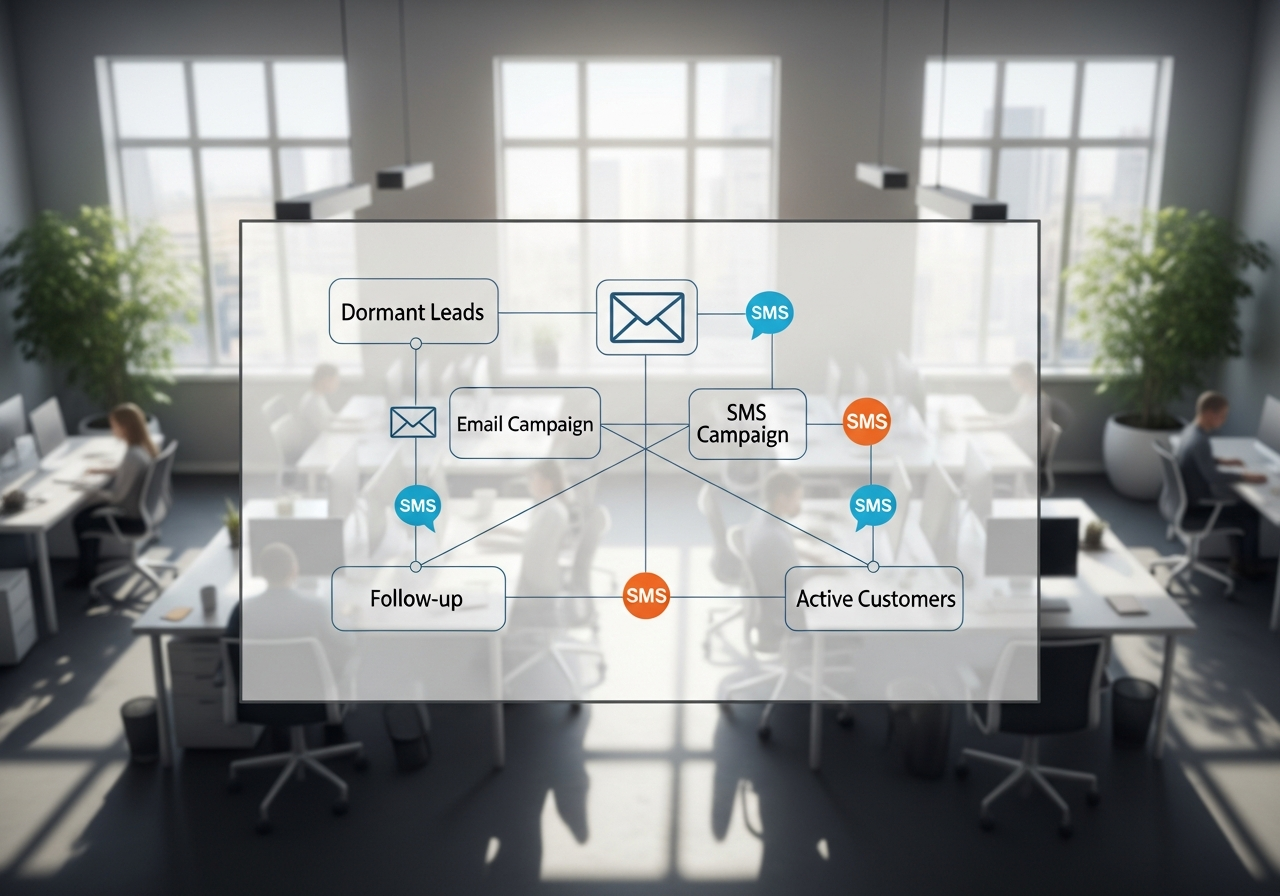 Using automated lead revival workflows is a big step forward. Automation helps make sure you do not lose track of any old lead. When you set up email campaigns and SMS workflows, you can reach many people at once. Your sales team does not have to do all the work by hand. This lets them to put their time into talking to active leads and getting deals done.
These workflows use things like time or what a lead does to know when and how to reach out. This makes your outreach more right for the person and sent at a good time. When you use automation with your CRM, you build a strong sales pipeline that keeps working on leads. You can bring old leads out of the graveyard and back into your pipeline.
Unlocking Hidden Revenue with Email and SMS
How much money do you have waiting in your CRM that is not working for you right now? For many businesses, the number is very high. The truth is, you may let 70-80% of your leads from the CRM go to waste because they do not turn into sales right away.
There is a way to bring these dormant leads back to life. With email and SMS automation, you can start running revival campaigns that reach out to old leads at the right time. You only need to send a short, friendly email and you could get someone talking to you again, even if it’s been a few months. An SMS can give you a fast answer because people see these messages right away. Using these workflows does not cost much and can bring a lot of rewards.
When you use crm automation to follow up with these old leads and get them back into your sales pipeline, you set up a new, profitable revenue stream for your business. All the hard work of getting and checking leads is already done. Now, you just have to reach out to them again with the right revival campaigns. This could bring in more sales and make the most of your old leads.
Improving Show-Up Rates and Conversion
Can lead revival help more people show up for their appointments? Yes, it can. One of the biggest problems in sales is people not showing up after setting a time. Leads who hear from you again through good revival campaigns are usually more ready to come in because you have looked after them. They don’t just see a random message. They feel like there has been a talk going on.
Automated email and SMS reminders help a lot with this. When a revived lead books a time, you should send them a note that says it is confirmed, a calendar invite, and something useful they can look at before the meeting. These steps keep your meeting top of mind for them and show them it will be worth their time.
This way of working really makes show-up rates go up. More people at meetings means there are more talks with people who want your service, and this will make your conversion rate better. Revival campaigns are helpful not just because they fill your calendar, but because these meetings actually turn into results.
Comparing Lead Revival to Other Nurturing Tactics
How does lead revival compare to other lead nurturing tactics? Lead revival is a highly specialized form of nurturing focused exclusively on re-engaging cold or dormant contacts. While general nurturing aims to educate and build relationships with a broad audience over time, revival is a targeted effort to restart stalled conversations and bring opportunities back into the pipeline.
Standard nurturing often involves long-term email campaigns and content delivery. Revival, however, uses more direct and urgent multi-channel outreach, combining email, SMS, and even direct mail to get a response. It’s less about passive education and more about active re-engagement with a clear call to action.
Let’s compare them directly:
|
Tactic |
Target Audience |
Goal |
Common Channels |
|---|---|---|---|
|
Lead Revival |
Dormant/cold leads (6+ months inactive) |
Restart a stalled sales conversation |
Email, SMS, Phone Calls |
|
Lead Nurturing |
Warm/active leads (early to mid-funnel) |
Educate and build trust over time |
Email Campaigns, Content, Webinars |
|
Cold Outreach |
New, unqualified prospects |
Generate a new lead or first contact |
Cold Email, Cold Calling, Direct Mail |
How AI and Technology Amplify Lead Revival
 AI and new technology give you a big boost in any lead revival plan. If you try to do follow-up by hand, it will not work well when you have thousands of people in your crm. You need automation for revival campaigns. These tools help you run many email and sms messages at the same time, so your team does not get too busy or stressed.
AI also helps a lot with smart segmentation. It looks for dormant leads in your crm and finds out which people may say yes soon based on what they did before. This means you can do better outreach with the right message for each person. When you use automation and AI together, your revival work becomes easy and quick. You will get a stronger sales pipeline and always keep your team ready to go.
Automating Outreach and Follow-Up
AI tools help bring back old or dormant leads mainly by handling outreach and follow-ups for you. It is not possible for your sales team to track and reach out to thousands of these leads by hand. Automation lets you run a revival plan across different channels without any work from your team.
You can set up workflows so one sends a personalized email on day one. Another sends an SMS on day three. The system can even send a LinkedIn connection request on day five. Your sales team do not have to click anything to make this happen. When a lead replies, the automation stops, and then someone from your sales team gets flagged to reach out to the lead in person. This keeps your outreach strong without bothering people.
These tools work with your CRM and use data to make sure every message feels like it was made just for the person getting it. Mixing scale and personal touch makes automated outreach good for bringing back leads. It helps you go through your whole list, so no opportunity gets missed.
Measuring Success with Data Analytics
You can’t make things better if you don’t know what’s going on. This is why data analytics is so important for your revival campaigns. Today’s CRM and automation tools give you access to a lot of data. You need to keep track of this data so you can improve your strategy. Stop guessing. Instead, make decisions that are shaped by real data.
Key performance indicators help guide you on what to do next. Track things like email opens, the click-through rates, and the SMS response rate. The SMS response rate is key, because it often shows which people really want to hear from you. You should also look at how many conversations start again, how many appointments get booked, and the return on investment for your revival efforts.
By looking at these numbers, you can see who in your database is most likely to reply. You can also find out what kind of words work best. For example, you may learn some people on your list come from one source, and those people are more likely to say yes. Use what you learn to keep getting better and bring in the most money from your pipeline.
Building an Effective Email Lead Revival Strategy
A good email lead revival plan starts with segmentation and personalization. You should not send the same email to your whole list. First, look at your CRM and sort your dormant leads. You should group them by what first interested them and why they stopped replying. This way, you can write emails that matter to each person’s needs.
Make email cadences that offer value to them over time. Do not only ask for a meeting each time. You can try different subject lines and keep track of your email opens. This helps you see what people like to read. If you do this well, your revival email can fill your calendar with qualified appointments from dormant leads you thought would not come back.
Crafting Compelling Re-Engagement Subject Lines
Your subject line is the first thing people see in a revival email campaign. If it does not work, the rest of your email will not matter. In revival campaigns, you want to spark interest without being too much like a sales pitch. Stay away from lines like “Just checking in.” Instead, try to make readers curious or remind them of your last chat.
Personalizing is important. If you add the prospect’s company name or a challenge you spoke about, the email is more likely to be read. You want your revival email to grab attention in a busy inbox and sound like you wrote it just for them, not for a whole list. The subject line is your chance to be noticed, and it can start a new talk with someone.
Here are examples that do well in revival campaigns:
-
“Quick question about [Their Company’s Challenge]”
-
“Following up on our [Product] conversation”
-
“Still exploring solutions for [Specific Problem]?”
-
“[Your Name] + [Their Name]”
Personalization Techniques that Drive Responses
People often ignore generic emails. If you want to get back in touch with dormant leads, you must make your emails personal. This does not mean just adding the person’s first name. True personalization is about using data from your CRM to make each message fit their needs.
Start by talking about the last time you spoke to them. Bring up the main problem they wanted to fix or the reason they said the timing was not good for them. Doing this makes it clear that you remember your talks and that this is not just a mass email. Use segmentation in your CRM so you can group people by which product they liked or how they first came to you. Then, change your message for each group.
For example, you should not send the same email to someone who came to your webinar as you would to a person who asked for a demo but did not show up. When you use these small details and shape your outreach for them, you will get a better response rate with your emails.
Optimal Email Cadence for Lead Revival
When it comes to lead revival, the best email plan is all about being steady. How often you send emails is not as important as staying consistent. With a good plan, you don’t give up too soon. At the same time, you won’t flood people with too many messages. The best revival campaigns use different touches over days or even weeks.
One way to do revival is with a multi-channel plan. For example, you can start with an email on the first day. If you do not get a reply, you send a new email with a new idea on the third day. On day five, you can try something different, such as an sms or sending a message on LinkedIn. This kind of approach helps you break through and get noticed.
The most important thing is to give something useful with every touch. Don’t keep sending the same “just checking in” email again and again. Instead, you might want to share a good case study, news about a new product, or something valuable in your industry. Every time you reach out, you want to help them think of you. This makes sure you are top of mind and are there at the right time when their wants change.
Leveraging SMS for Lead Re-Engagement
 Don’t overlook how SMS can help your revival campaigns. Email works well, but inboxes can fill up fast. Most people open SMS messages very soon after they get them. This means SMS can cut through all the noise and help you get a quick reply.
You can use SMS for messages that are short, friendly, and right to the point. It works well for following up after you send an email. It’s also great for a “last chance” note to unresponsive leads. Still, it is important to follow all rules to stay out of trouble. When done the right way, SMS can make your revival and pipeline outreach perform much better.
SMS vs. Email—When and Why to Use Each
Knowing when to use SMS or email matters a lot if you want a good outreach plan. The two channels work in different ways, and you can get a better response rate when you use them together. Email works well when you want to send a longer message with more value. SMS is better for fast notes that get the reader’s attention.
It is a good idea to send your first re-engagement message through email. Email gives you space to talk about the past, add reports or case studies, and offer something useful. Email is not in your face, so the person has time to read and think about what you said.
Send an SMS for your follow-up. Use it with people who did not answer your last email. A short text can get the interest of someone who missed your earlier message.
-
Use Email For: Your first message, sharing details, and sending formal proposals.
-
Use SMS For: Short follow-ups, reminders for meetings, and offers that are time-sensitive.
-
The Power Combo: Send an email, then follow with a text after a day or two that says, “Hi [Name], just sent you an email, let me know your thoughts.”
Key Elements of High-Impact SMS Messages
A strong SMS message needs to be short, feel personal, and include a clear call to action. In SMS, you do not have as much space as an email. There is no room for long messages or lots of details. It’s better to be direct yet sound natural. The main point is to get a real conversation started. You are not trying to make a sale over text.
Making the message personal really matters. Always use the person’s first name and talk about why you are reaching out. For example, you might write, “Hi John, it’s [Your Name] from [Your Company]. I’m following up on my email about [Topic]. Are you still interested?” Make sure to say who you are because your phone number will not be saved in their contacts.
Here are the important things to include:
-
Start with their name: This makes it personal right away.
-
Identify yourself: Share your name and company.
-
Provide context: Say why you are texting.
-
Ask a simple question: Make it easy for them to reply, like asking a yes or no question.
-
Keep it conversational: Use everyday words and keep away from formal or business-only language.
Ensuring Compliance with SMS Marketing Regulations
While SMS is a strong way to reach people, you have to be very careful to follow the rules. In the United States, there are strict laws like the Telephone Consumer Protection Act (TCPA) that control how businesses use text messages. If you break these rules, you could face big fines.
The main rule is that you need to get clear written permission before you send marketing messages by SMS. Getting this for lead revival can be hard. If someone gives their phone number through a web form that says they will get texts, you might be okay. But, you need to check what your consent forms say.
You should always give an easy way for people to stop getting your messages. For example, you can let them reply with “STOP.” Your crm or SMS tool should handle these opt-out requests by itself so you do not break the rules by mistake. It is also a good idea to talk to a lawyer. That way, you know your outreach plan with sms follows all the right laws.
Specialized Lead Revival Tactics for Different Industries
Lead revival does not have one set formula. The tactics you use in a B2B software company will not be the same as those used by real estate agents. You need to shape your plan to fit the buying cycle, trigger events, and the way people like to talk in your industry.
For instance, a B2B revival usually looks at things like budget timelines and when new leaders come in. In real estate, revival can happen when big changes take place in a person’s life. When you change your outreach style based on these needs and use SDR services that fit your business, you can get more from your efforts. This will help you make the most of your CRM and get a better ROI.
B2B Lead Revival Solutions
Yes, there are B2B services made for lead revival. These are now very important. The B2B sales process can be long and not always simple. Many leads can lose interest for months. This happens because of things like budget planning, changes inside a company, or checking out other vendors. That is why some companies offer special lead revival services as part of their SDR work.
These services do more than just send out email blasts. There is real work done behind the scenes. People will research to spot trigger events. This can be when a target company gets new money or hires a new top leader. The outreach for these cases is made just for that one company. They use email, call on the phone, and send messages on LinkedIn. It is a mix of ways to connect.
A B2B revival campaign wants to build a real connection with the person, not just sell right away. The main goal is to start good talks again and add value. It is not only about booking a meeting. It is also about getting that prospect back in the pipeline and setting up a new path forward with them.
Lead Revival for Real Estate Agents
Is lead revival good for real estate agents? It is more than good—it is needed. The home buying and selling process can take a lot of time. Some people look at homes for months, or even years, before they make a move. A lead who was not ready to buy or sell six months ago may have a reason to make a move now. They could have had a big life change, like getting married, starting a new job, or when their family grows.
For real estate agents, lead revival is to stay top of mind with people you spoke to in the past. Use your CRM to mark leads who have stopped talking with you. Set up emails and SMS outreach that go out by themselves. You can send them market news, new listings that fit what they liked before, or some guides to talk them through the home-buying process.
A short and personal message, like, “Hi Sarah, I know you were looking in the Northwood area last year. A few new homes just came on the market I thought you might like. Still looking?” can really work. This is outreach that is easy to do. It can help you turn your old lead list into a good way to get new clients.
Measuring ROI Across Industry Segments
What kind of results can you expect from a lead revival campaign? The return on investment (ROI) will vary by industry, but it is almost always significantly higher than the ROI from generating new leads. This is because the cost of re-engaging an existing contact is a fraction of the cost of acquiring a new one.
To measure ROI, you need to track both the costs and the returns of your revival campaigns. Costs include any software fees (e.g., for an SMS service) and the time your team invests. The return is the total revenue generated from deals closed with revived leads.
Here is a simplified comparison of expected ROI:
|
Industry Segment |
Average Sales Cycle |
Key Revival Triggers |
Expected ROI |
|---|---|---|---|
|
B2B SaaS |
6-12 months |
Budget cycles, new hires, funding |
High (300-500%+) |
|
Real Estate |
3-9 months |
Life events, market shifts |
Very High (400-600%+) |
|
Insurance |
1-6 months |
Policy renewal dates, life events |
High (250-450%+) |
Regardless of the industry, a systematic revival process consistently delivers a strong positive ROI by turning a sunk cost (old leads) into new revenue.
Conclusion
To sum up, using good lead revival methods with both email and SMS is more than just a passing thing. It is key if you want to get the most out of your sales. When you set up your outreach to run by itself and send the kind of messages each lead needs, you have a better chance to bring cold leads back in. The right subject line and a message that fits the person can help push more people to respond and buy from you.
Knowing the small differences between how you use SMS and email can help make your plan work even better. That way, you reach people with the right message at the right time. As we all learn more about how to work leads, keep in mind that many dormant leads still in your CRM can be important for your business. Don’t let these leads get away. Reach out today to make your own lead revival strategy better.
Frequently Asked Questions
Can lead revival strategies improve appointment show-up rates?
Yes, for sure. Revival campaigns help you reach people who already know your brand. This makes them take part more in the talk. When you use email and SMS reminders after they book a meeting, you keep the meeting on their mind. This can help more people show up and can boost your overall conversion rate.
What results should you expect from an automated lead revival campaign?
You can see a big boost in ROI when you use automated revival campaigns. These campaigns can help you get back in touch with 10-15% or more of your dormant leads. This means you will get new appointments and make more money from the people who are already in your CRM. You can do this for much less than what it would cost to find new leads.
How do specialized lead revival services work for B2B and real estate?
Specialized services change how they work to match different buying cycles in each industry. For B2B, they pay close attention to trigger events like when budgets get approved. For real estate agents, they watch for big life events and shifts in the market. Both use segmentation in your CRM and multi-channel outreach. This helps them reach out to people at the right time and get them interested again.