Key Highlights
-
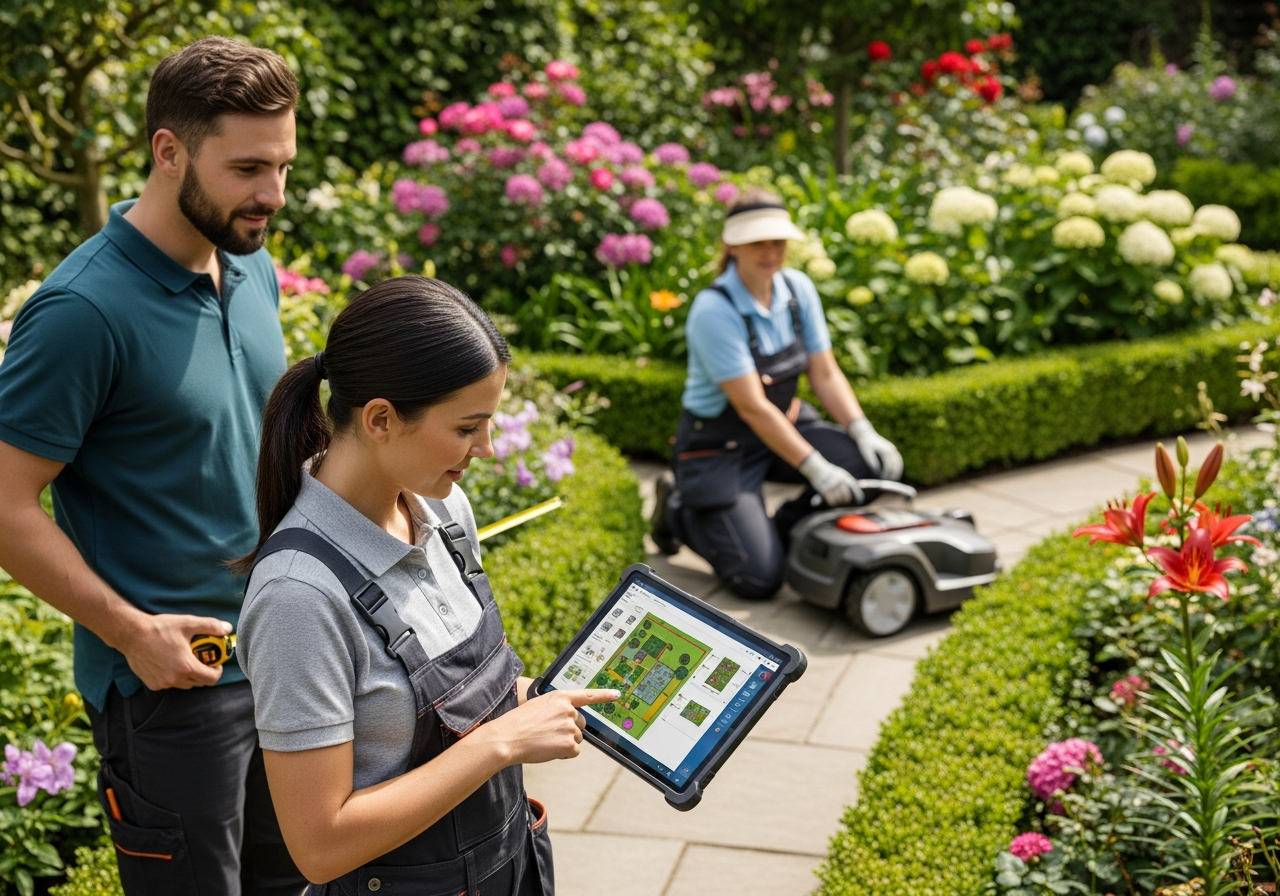
Wondering about using AI for Landscaping Business? AI is reshaping how these companies approach design, planning, and client communication.
-
Client-facing visualization tools that generate photorealistic previews on-site are closing more deals than traditional proposals.
-
AI-driven automation handles tedious tasks like scheduling, material estimation, and marketing, optimizing the entire workflow.
-
While powerful, the adoption of complex landscape design software is hindered by steep learning curves and high costs.
-
Effective integration involves starting with simple visualization tools before moving to comprehensive job management and site analysis platforms.
-
AI enables even small landscaping businesses to streamline operations and compete with larger, more established firms.
Introduction
The landscaping world is changing, and some people do not see it yet. Artificial intelligence is not only a thing for the future. The top landscaping businesses use it now as a tool to get ahead. Landscape architects and company owners who still do things the old way are falling behind. The big question is not if artificial intelligence fits in with your workflow. Instead, it is about how fast you can use it before others get ahead by getting more clients and making more money.
The Rise of AI in Landscaping Business Industry
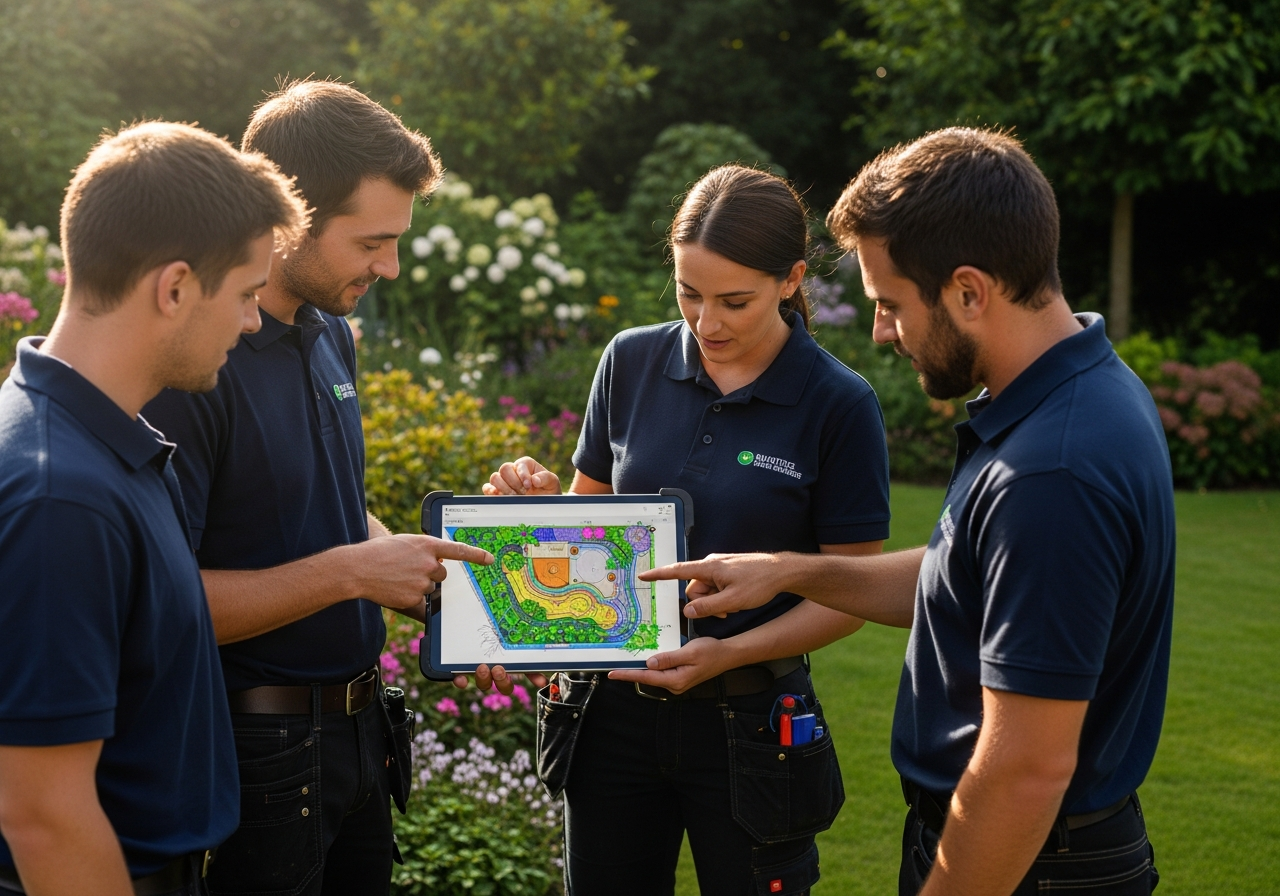 The U.S. landscaping industry is changing a lot because of new technology. The old days of using only portfolio books and talking about work are almost gone. Now, some firms are using automation and AI to get better results faster.
How is AI changing landscaping right now? For landscape architects and people working in landscape architecture, an AI landscape design tool does not take away from creativity. Instead, it helps by making site analysis, visualization, and talking with clients easier. The new technology lets professionals spend more time on what matters most, which is making great outdoor spaces that look good and work well.
Shifting Trends: How Technology Is Reshaping Landscape Design
Technology is changing the way people work in landscape architecture. In the past, landscape architects spent a lot of time making site plans by hand and drawing renderings. Now, digital design tools make this job much faster and more efficient. What used to take hours or days can now be done in only a few minutes.
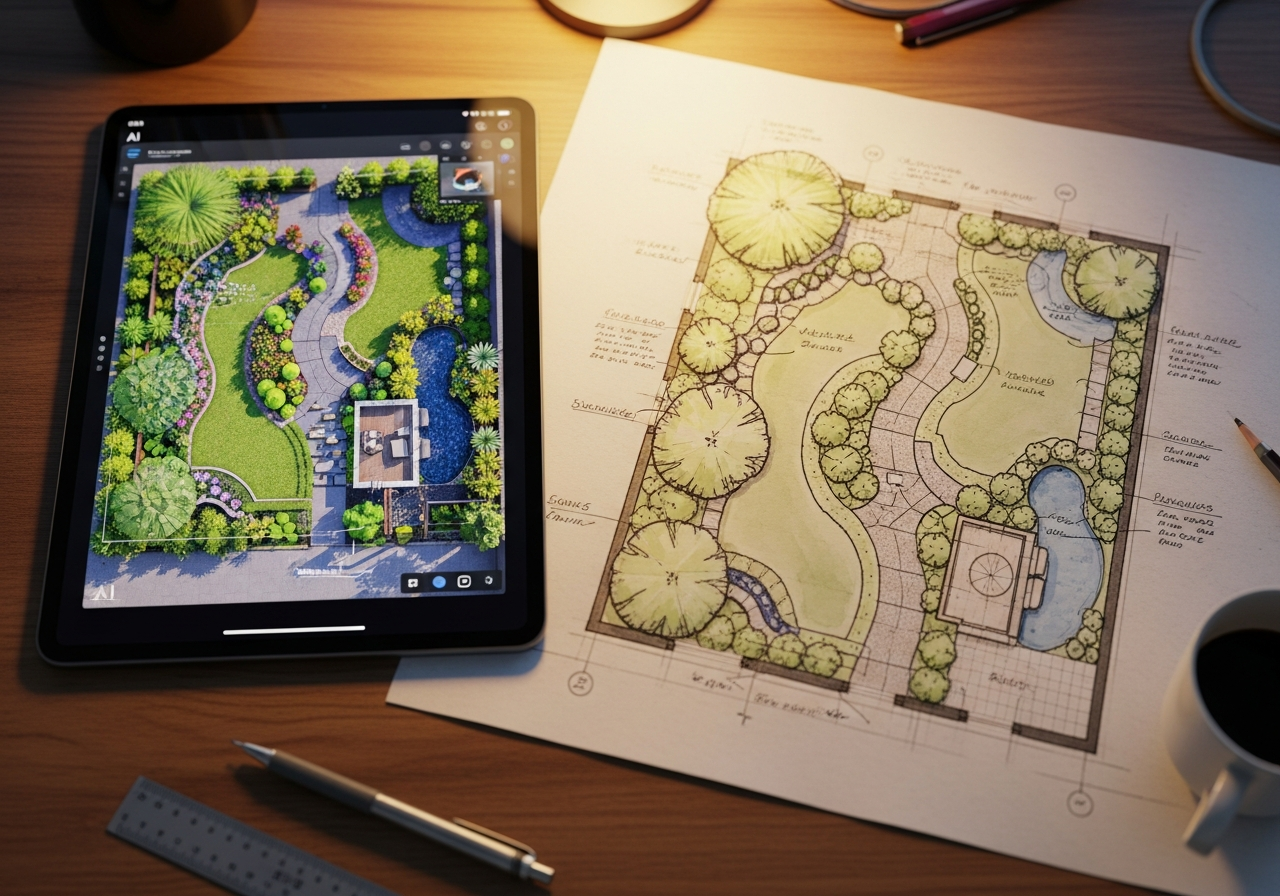
One big change is using AI-powered design tools. So, how can you use these new tools to create landscaping layouts for your business? With these design tools, you can start with just a small sketch or a simple 3D model. The design tools will give you photorealistic visuals right away. A good visualization tool can help you show clients a clear and beautiful preview of their new garden. These tools will make sure the geometry and layout that you planned are shown in the right way.
Using these new ways to work does not mean losing control. Instead, you get to handle your design work of landscape architecture in brand new ways. These smart design tools let you set rules and guides, making sure your ideas stay true to the structure you want. You can quickly try out many different ideas and layouts. This means you spend less time on slow, manual work and have more room to focus on the main ideas that make good landscape architects stand out in their field.
Key Drivers Behind AI Adoption by Landscape Businesses
The move to use AI in landscaping companies is not just about following the latest trends. It’s a smart step because it brings real benefits. The main reasons are better efficiency, more accurate work, and happier clients. When routine tasks be done with automation, skilled workers can spend more time on hard jobs that bring in more money.
What do you get when you use AI in a landscaping business? There are many clear benefits. AI tools can go through a lot of information. This includes environmental data and old project costs. This helps you make smarter choices right from the start. Because of this, jobs end with better results and more profit.
Key drivers include:
-
Enhanced Visualization: AI helps show the plan better to the client. This makes it easy for both the contractor and client to see the same thing, so proposals get approved faster.
-
Operational Efficiency: Automation does things like scheduling and talking with clients. It helps lower the time you spend on paperwork.
-
Data-Driven Insights: AI can look at climate data for each site. It then suggests the best plants and can guess how well they will do.
Common Barriers Slowing AI Integration Among Professionals
Even though there are clear benefits, the use of new technology and AI in landscaping has not grown fast. Many professionals still hold on to the way they have always worked and the tools they know. They worry for good reason. There are real problems that slow the use of this new way of doing things.
Why do so many people in landscaping not want to use AI yet? One big reason is people see it as hard to use and costly. The time and money you need to get started can seem like too much, mainly for small companies who need to look at every dollar.
Here are some common barriers that keep people from trying:
-
Steep Learning Curve: Many landscape design software and professional tool options be hard to learn. They need a lot of extra training. You may feel like you need to be a CAD expert just to use them, instead of it working simply for a contractor.
-
High Subscription Costs: These programs often demand an ongoing fee. That can be too high for most companies except the very biggest.
-
Fear of the Unknown: People are not sure if the new technology will work well. This worry stops many people from trying it out at all.
Core Benefits of Using AI for Landscaping Companies
 For landscaping businesses that want to use artificial intelligence, there is a clear way to get more done and make more money. The main benefits go way beyond nice-looking pictures. AI can help with every step, starting with the first talk with a client and ending with the final bill for the project. Artificial intelligence is not just a new tool that helps with landscaping. It is something that can shape your whole workflow to be better and faster.
How does AI help landscaping businesses work more efficiently? AI gets rid of tasks that you have to do over and over by letting computers handle them. It gives landscape architects and their teams useful information from data. This means they get more done in less time. Because of this, people can spend time on things that matter most, like talking to clients or coming up with good creative designs. This also helps the business earn more money and grow even more. The next parts will talk about these benefits more closely.
Speed and Precision in Design and Planning
In the world of landscaping, it is important to be fast and exact. The old way of designing is often slow. Mistakes can also happen. AI-powered design tools fix these problems. They offer a simple and quick workflow. These tools can really change how you design and plan.
How do you use AI tools for your landscape designs? With AI, you can make many landscape designs in the time it took to do just one before. The design tools can use a simple photo of your client’s yard. After that, it can make a life-like picture in less than a minute. This helps you work with your client and make changes quickly. People can decide faster now.
This speed does not mean you lose accuracy. AI platforms can be set up to follow hardscape lines, old structures, and the edge of each property. This way, the design tools will give you something that looks nice and is also ready to build in real life. The mix of speed and good, solid visualization is huge for those working in landscaping.
Reducing Labor and Operational Costs
One big reason for landscaping companies to use AI is that it helps save money. Labor and operations often take up most of the budget in a landscaping business. When you use automation the right way, you can get back a lot of time and cut costs.
What are the main benefits of using AI in landscaping? One big advantage is that you can do less manual work on routine tasks. With AI, you can take care of jobs like handling paperwork, organizing schedules, reminding people about jobs, and more. That means your team can focus on work that will bring in more money.
The effect of automation is not just in the office. In landscaping, AI helps plan the best routes for work crews. It can be used to calculate the right amount of materials so you use less and waste less. AI can also send messages to customers after a job is done. Each of these tasks helps lower costs. Over time, that makes your business run smoother and be more profitable.
Enhancing Creativity and Customization for Clients
Some people think that technology can stop people from being creative, but with AI, the opposite is true. AI helps make people more creative. It takes care of boring design jobs, so landscape workers have more time to think of new and better ideas for their clients. They can also offer a higher level of garden design customization.
A good visualization tool is at the center of this new creative process. When clients get to see a clear and lifelike look at what their future garden may be, it makes talks about the design easier. You do not have to deal with ideas that are hard to picture. The client can see real details. That way, you can change its materials, pick other plants, or even move things around as soon as clients ask. You and the client work together in real time to build their dream garden.
So, how does AI change landscaping for the better? This fast visual feedback loop makes the design work feel exciting and lets clients help every step of the way. They get to be a part of the project, and the dream garden will match exactly what they hoped for. People like this high level of choice and involvement. In the end, happy clients mean your work stands out, and your landscaping portfolio will look even stronger.
Automating Tedious Tasks in Landscaping Using AI
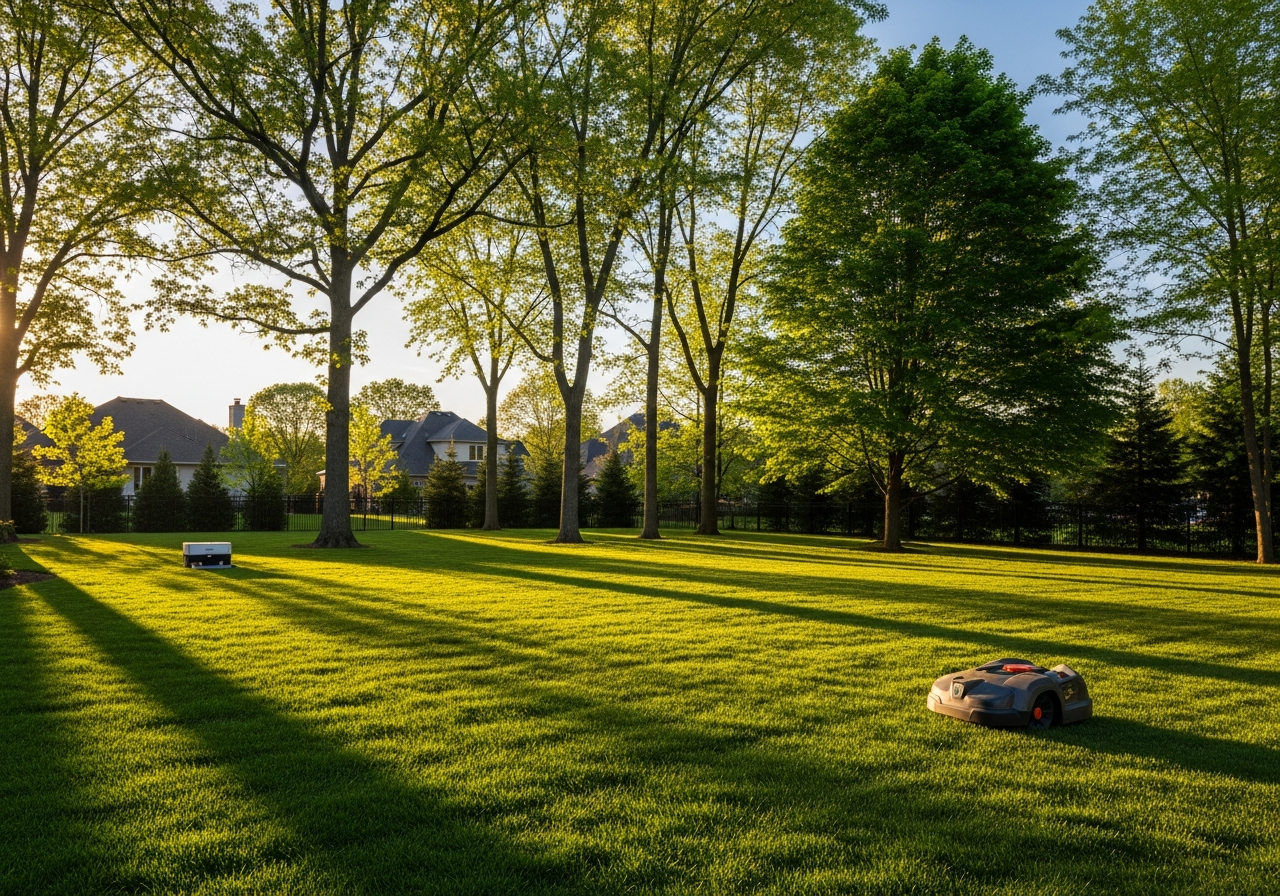 The real strength of AI in landscaping is not just in handling the big design jobs. It really shines in the daily work. Automation can take care of the routine tasks that use up a lot of time, such as lawn care plans or billing clients. If you use AI, you get back many hours that you would have spent doing the same things over and over.
What kinds of jobs in landscaping can AI handle for you? It can help with things like planning the best routes for crews, keeping up-to-date chemical use records, and sending review requests to your clients after each job is done. By letting an AI system do these routine tasks, you make your workflow smooth. It also helps you not forget any part of the job. The next examples will show how this works.
AI Scheduling and Project Management Applications
Good scheduling and project management are key for any landscaping business to be successful. But these jobs can turn into a mess fast. Now, AI-powered apps help put things in order. They are made to make your time, crews, and work run much better.
AI can really help landscaping companies talk to customers and plan jobs. Platforms like Jobber let you use AI features to make this easier. The software can cut down on drive time by picking the best daily routes for crews. It sends booking confirmations to your clients and reminds them of their appointments. You can check how jobs are going, all from one dashboard. This helps build a smooth workflow from getting a quote out to getting paid.
You get a lot out of these apps and project management tools:
-
Optimized Routing: AI algorithms help you take the best route on days with lots of stops. This saves on gas and keeps you on time.
-
Automated Scheduling: The system handles booking jobs and keeps crew calendars up to date for you.
-
Centralized Job Tracking: All details, notes, and photos stay in one place. Both office staff and crews in the field can get what they need.
These features help landscaping companies work better together, get more done, and build a workflow that is less stressful for everyone.
Customer Communication and Lead Generation Automation
Staying in touch with your customers and getting new leads is important for growth. But doing this takes a lot of time. Automation powered by AI can handle these important jobs for you. It works in a way that you can trust and does not miss chances like people sometimes do by mistake.
AI can help landscaping companies talk to customers and set up jobs. For example, after a job is done, an automatic message can send a thank you note to your customer. Then, it can ask for a review about a day later. This kind of automation can bring in more good reviews online, which helps a lot when people look for landscaping companies in your area. It also helps get more leads.
Marketing tools also use AI to reach more people. AI makes it easy to create posts by making captions for before-and-after photos of your work. This can get you more people who ask about your landscaping services. Also, sites like Google Ads use machine learning to run your ads better. They find new customers in your area when there is more need for landscaping, all without you having to work on the ads all the time.
Estimating Materials, Budgets, and Timelines with AI
Estimating is a high-stakes task where precision is paramount. Underbid, and you lose money. Overbid, and you lose the job. AI brings a new level of accuracy to estimating by analyzing historical data and project variables to produce more reliable quotes for materials, budgeting, and timelines.
How does AI improve efficiency for landscaping businesses in this area? Instead of relying on guesswork, AI-powered estimating platforms like LMN can analyze your company’s past performance on similar jobs. The system considers your actual labor hours, material usage, and job site conditions to generate a data-driven estimate, reducing financial risk.
This intelligent approach ensures that your budgeting is grounded in reality. The AI can provide a detailed breakdown of costs, helping you build a profitable yet competitive proposal.
|
AI Estimating Factor |
Traditional Method |
AI-Powered Method |
|---|---|---|
|
Material Takeoff |
Manual measurement |
Automated from job photos |
|
Labor Calculation |
Gut feeling, averages |
Based on historical data |
|
Timeline Projection |
Best-guess estimate |
Analyzes similar past projects |
Workflows: Integrating AI Seamlessly Into Your Landscaping Business
Starting with new technology can seem like a big task, especially for small business owners. The right way to be successful is to avoid changing everything at once. You need to bring AI tools into your own workflow, bit by bit, to see what works best for you. Start with something small, show the value it brings, and go from there.
The main aim is to build a workflow that runs smoothly. You want the ai landscape design tool, and any other apps you use, to fit in well with what you already do. These tools should not get in your way or slow you or your team down. The way you set them up and start using them should make things easier for your team. It should help them get more done, not cause problems. The next parts show a clear way for you to help bring in these new technology tools, and use them well.
Step-by-Step Guide to Onboarding AI Tools
Onboarding AI tools does not have to be hard or stressful. You can handle the learning curve by taking small steps. This way, you show value at each point, and the setup goes smoothly. Try to begin with the tool that takes care of your biggest problem right now.
Many contractors say closing proposals is the hardest part of the job. So, your first step should be picking a client visualization tool. Wondering which apps use AI for landscape design visualization? Makeover.so and iScape work well for this. These apps are made for use right on site. They have almost no learning curve and give quick results.
Here is a good way to onboard these tools:
-
Phase 1: Visualization: Use a simple AI landscape design tool during client walkthroughs. It can help your sales process.
-
Phase 2: Job Management: When your sales start to go up, add a tool like Jobber. Use it to manage your scheduling and invoicing before there are too many jobs to juggle.
-
Phase 3: Deep Estimating & Marketing: After your basic work setup is steady, bring in advanced estimating tools and marketing automation to help your business earn even more.
This phased way makes it easy for you and your team to get used to new apps, automation, and landscape design tools, with every step building on the last.
Training Staff and Streamlining Collaboration with AI
The success of any new tool in landscaping businesses comes from the people who use it. When there is a move to new technology, you have to manage both the software and your staff. Good training and talking clearly with your team helps. This way, they will be more ready to use the new system and not fight against it.
When you start using AI tools, talk about why you are doing it. Tell your team how the new technology will make work easier, not harder, for them. For example, when you use a project management app, your staff will do less paperwork and they will have less time on the phone figuring out what is needed on a job site. Let the training show all the ways it helps.
A big benefit is better teamwork. When you put all the project info, like client notes, site photos, and job schedules, on one cloud-based system, it gets everyone working together. This helps the office staff, crew leaders, and your sales team have the same facts. So, people make fewer mistakes and everything goes more smooth. This is a good example of how AI can make work better for landscaping businesses.
Best Practices for Maintaining Service Quality During Digital Transition
Putting in new technology can cause small changes in how your team works for a short time. It is important to have a plan to keep things working well and in the same way while moving to new digital tools. You want your clients to see the good things about the new technology. They should not have to deal with any problems while the switch happens.
One good way to do this is to run the new system and the old system at the same time for a bit. This gives you a safety net if anything goes wrong. Your team gets time to know the new workspace and does not have to deal with too much at once. This also lets you catch any problems before you fully move over to the new technology.
To make the change easy and keep things going well for clients:
-
Communicate Internally: Make sure your team knows about what will happen. Give them time to train and help when needed.
-
Start with a Pilot Group: Try out the new tools with one small group at first instead of changing things for everyone at once.
-
Focus on Consistency: Make sure the main things the client needs, like getting bills or staying in touch, are always steady while you change.
This way, you can bring in new technology and keep your clients happy with good, steady service and a helpful workspace.
Conclusion
To sum up, using AI in the landscaping business is no longer just a nice thing to have. It is something you must do to keep up in this fast-changing world. When you learn about AI and use it in your work, you can make better designs. You can also lower your costs on jobs and give clients a better experience. AI helps you work faster and come up with new ideas. These are things that you and other people in landscaping should not ignore. As you think about what’s next, look at how AI can change the way you work and help you give better service. If you want to know more, you can get a free consultation. This way you will find the best AI tools for your landscaping business.
Frequently Asked Questions
Can AI help small landscaping companies compete with larger firms?
Yes. Artificial intelligence gives everyone a fair chance. This new technology helps small business owners get strong automation and visualization tools that used to be just for big landscaping companies. With these tools, small firms can improve workflow and use their time well. They can get more sales, offer better service, and keep up with the bigger companies in landscaping.
How does AI improve efficiency and client experience in landscaping?
AI improves the way clients see and work with their projects. It makes it easy for people to get quick and clear views of what their new space will look like. A landscape design tool can give instant, real-life previews that help everyone stay on the same page. The use of automation helps, too, because platforms like Jobber handle the schedule and send reminders without trouble. This smooth workflow helps every project go better. It means the business works faster, and the customer is happier with the results.