
Key Highlights
-
Automate lead nurturing by using software to send personalized, timely messages to guide prospects through the sales funnel.
-
Key benefits include improved engagement, higher conversion rates, and significant time savings for marketing teams.
-
A successful setup involves segmenting your audience, mapping the customer journey, and creating relevant content sequences.
-
Effective strategies include personalization with dynamic content, multi-channel outreach, and using lead scoring to prioritize efforts.
-
Regularly track metrics like open rates, conversion rates, and sales cycle length to optimize your campaigns.
-
Avoid common mistakes such as over-automating, sending generic content, and misaligning marketing and sales goals.
Introduction
Many businesses do not do lead nurturing well, and they hope prospects will buy without being given a clear path. This does not work. If you do not guide potential customers, you lose them. Your competitors get those people instead. You should stop missing out on this money. Marketing automation helps you change your lead nurturing by making it easy, fast, and strong. You will not need to do each step by hand. With this, you can get higher conversion rates. You turn people who are interested into real sales and bring in more money.
Understanding How to Automate Lead Nuturing
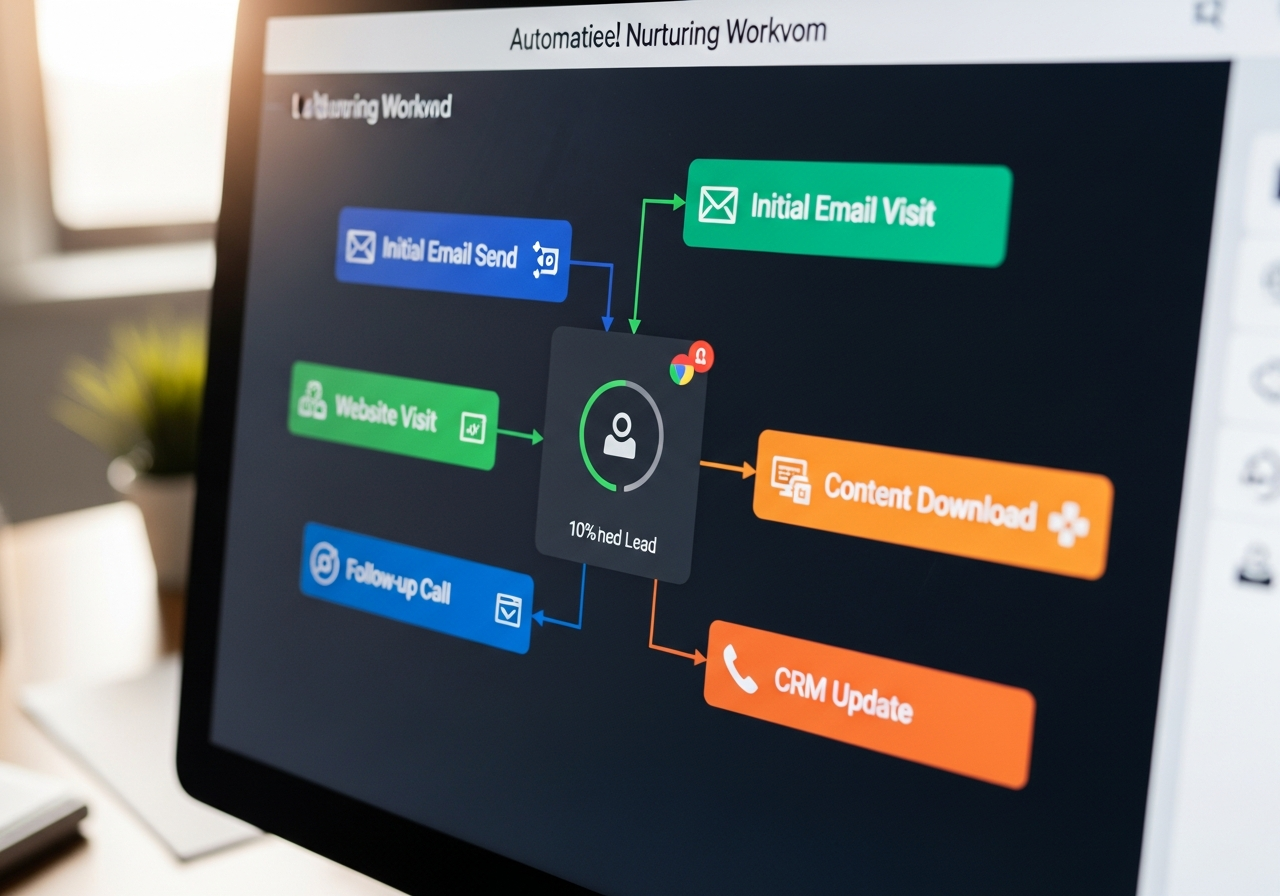 Lead nurturing automation is not just sending out the same emails to everyone. It is about using automation tools to send the right message to potential customers. The system chooses the right time based on what they do and what they like. This way, marketing teams can grow their nurturing efforts without trouble.
With lead nurturing automation, there is no need for manual follow-ups. Automated systems will send out messages after certain actions. This makes sure no lead is missed. By doing this in a set way, you get to build strong connections, teach prospects, and help them move through the sales funnel faster. It also lets your team spend their time on strategy, not busy work or repetitive tasks.
What Is Lead Nurturing and Why It Matters
Lead nurturing means you build strong relationships with your target audience at every step in the sales funnel. It is a bad idea to think every lead will buy right away. Most people do not. Your goal is to help them and give them useful information until they are ready to choose.
Lead nurturing is not just about talking with leads. It is how you earn their trust and show you know what you are doing. When you share relevant content at the right time, you show your brand is a good helper and not just trying to sell. Doing this is how you help people move from just learning about you to making a buy.
If you do not have a good lead nurturing plan, you are letting go of potential customers. These people could turn into strong supporters for your brand. When you skip this part, you waste your lead generation work. You do not make good use of your chances, and you help your rivals take the lead.
How Automation Transforms the Lead Nurturing Process
Automation changes how you do lead nurturing. It takes away the harder manual jobs that can have mistakes. This lets you use smoother, larger systems. Your team does not need to spend hours sending follow-up emails anymore. Marketing automation does most big tasks. It makes sure the messages go out when they should. It also keeps things moving, so you have more time to do other important work.
Workflow automation lets you make campaigns with several steps. These can change based on what the lead does. The automation tools be strong enough to help you reach the right people each time and let you use personal touches at a big scale. You might use these systems to:
-
Trigger special email series set up to send as soon as the user downloads something.
-
Place leads in lists built on their likes, what they look at, and how much they care.
-
Score each lead, so you see who can be ready to talk to a sales person.
In the end, automation makes your nurturing efforts sharp and quick. Every lead can get a message that fits their needs and interests. This moves them ahead in the buyer’s journey faster than you could with manual work. When you use marketing automation, you stop leads from getting cold, and you start getting results you want.
Key Benefits of Automating Lead Nurturing
 The main benefit of using automation tools for lead nurturing is it helps you do more and do it well. You do not spend your time on the same tasks again and again. You start to work more on the plan for lead generation. This way, you can get more leads but not make your sales teams and marketing teams work too hard.
When you use automation tools, you give people the right content at just the right time. This helps you make better bonds with people who may want to buy from you. And you lead them smoothly to make a purchase. People are more likely to take action, conversion rates go up, and you can see what the sales pipeline will be like. Your teams always work with leads who know what they want and are ready to buy. The next parts will show more benefits of lead nurturing, lead generation, automation tools, conversion rates, delivering relevant content, sales teams, and not having to deal with repetitive tasks.
Boosting Engagement and Conversion Rates
If your engagement rates are low, your current approach to reaching people is not working well. Automation can help with this. It gives your audience relevant content that gets their attention. You do not have to send the same message to everyone. Instead, you can send messages that speak to what each person likes, how they act, and where they are in the sales funnel. This way, people are more likely to open your emails and click the links.
When people pay more attention to you, it is not just a number to make you feel good. More engagement can lead to more sales opportunities. When leads feel you listen to them and they matter, they are more likely to take the next step. Automation lets you see when people are ready to buy and act right away. This can change people who are only a little interested into those who want to buy now. With automation, you can get:
-
Higher open rates and more people clicking in your emails.
-
More people downloading your content and signing up for your webinars.
-
Better conversion rates in every step of the sales funnel.
With a good system for automated nurturing, your leads keep engaging with your content again and again. When people get more content made just for them, they feel like you know what they want. This makes them much more likely to become your customers.
Improving Communication with Prospects
If you use the same message for everyone, you will lose a lot of potential customers. Automation helps you move past this mistake. With customer data, you can make each message feel personal. When you know what people do online, you can send the right content through the right communication channels, and you can do it at the time when it matters most.
Think of sending a technical whitepaper to an IT manager just after he looks at your product specs page. Or sending a cost-benefit analysis to a finance leader who checks your pricing. You cannot do this, at scale, without automation. Automation lets you include this smart way of talking to people as part of your marketing campaigns.
With this targeted style, your message really connects with each person. You build trust and show that you know what each prospect needs. Your outreach is not just you talking—it becomes a true conversation. This helps guide people along, as they learn about you, with info that matters to them.
Saving Time and Enhancing Efficiency
Your marketing team has work that should not be used on tasks they do over and over again, like sending out follow-up emails or sorting contact lists by hand. Lead nurturing automation can take these simple jobs, so the team can focus on things that really help, like coming up with plans, making new content, and looking at how well things are going.
Workflow automation is what helps make all these jobs quicker and easier. The team can set up many steps that run day and night without having to do anything. This makes sure that each lead gets the right message when it is needed, no matter when they come in. This way, none of the leads get left behind.
Automation also helps with A/B testing, so it becomes simple and can grow with your needs. You can try out different messages, email subjects, or deals to see which one people like most. Doing this all the time helps keep your nurturing efforts getting better and better, giving you better results while still letting your team get more done.
Step-by-Step Guide to Automating Lead Nurturing (Beginner’s Guide)
 Setting up automated nurture campaigns can be easy if you have a good plan. You do not need to do it all in one go. Take it step by step by using a simple process. Start by getting to know your audience and by working out who your best buyer persona is.
After this, map out the customer journey. This helps you find out where in the process your marketing teams can step in and help the most. If you use this setup, you will be able to build successful campaigns using the best automation tools. That way, you turn potential leads into loyal customers. Let’s go through the important steps so you can get started.
Step 1: Define Your Lead Segments and Buyer Personas
If you try to market to everyone, you end up not reaching anyone. The first and most important thing to do in any automation plan is to know exactly who your audience is. Do not guess. Use data instead. Look over your current customer data and intent data to make groups of leads.
A buyer persona is like a model of your ideal customer you build from this research. It is not about basic facts. Your buyer personas need to give details like:
-
Job roles, what they do, and their pain points.
-
Goals, what drives them, and how they like to talk.
Knowing these things is the foundation of a good marketing strategy. If you do not have clear lead segments and buyer personas, your messages will sound dull and cold. They will not work. Spend the time now to get this right, and your content will speak to people and get results.
Step 2: Map the Customer Journey
When you know who you’re talking to, you need to learn how they decide to buy. The customer journey is not just an idea. It’s a plan for your content marketing. It shows every part of the sales funnel, starting from when they first hear about a product to when they make a final choice.
Find the main points and questions people have at each step. Think about what they want to know when they notice a problem. Notice what they check when they compare answers. Things like website visits or downloads help you see where they are in their journey.
By seeing this path, you can set your plan to match what people need at every step. This will help you send the right message at the right time. You want to guide them through each stage without a problem. Don’t skip this step. If your journey is not mapped well, your messages might not connect, and you will not nurture leads as well.
Step 3: Plan Content and Messaging Sequences
With your personas and journey map ready, it is now the time to set up your nurture campaigns. You need to make relevant content that fits what your audience needs and wants right now. You can use things like blog posts, whitepapers, case studies, and webinars.
Your email marketing is the main tool to send out this content. Do not just send random articles. Plan your emails in a way that makes sense, tells a story, and helps guide people forward. The point is to get the right message to your audience. You want them to feel more sure of their choice every step of the way.
As an example, leads at the awareness stage may get simple blog posts. The leads at the next stage, who want to know more, could be sent a long case study. This way of sending content helps make sure your emails are always useful and up-to-date. Your brand can become the one people go to for advice.
Step 4: Set Up Workflow Rules and Triggers
This is where your strategy becomes reality. Workflow automation is driven by rules and triggers that you define within your marketing automation platform. A trigger is a specific action a lead takes, and the rule is the automated response that follows. This is the core of effective automation features.
For example, when a lead downloads an e-book (the trigger), a workflow can automatically enroll them in a follow-up email sequence. You can also use lead scoring as a trigger; when a lead’s score reaches a certain threshold, the system can automatically assign them to a sales representative for follow-up. This ensures you’re engaging hot leads at the peak of their interest.
These rules create a dynamic sales process that adapts to each lead’s behavior. Instead of a rigid, one-way communication stream, you build an interactive journey. Here are some common examples of triggers and actions:
|
Trigger (Lead’s Action) |
Automated Action |
|---|---|
|
Fills out a “Contact Us” form |
Send an immediate confirmation email and notify a sales rep. |
|
Visits the pricing page three times |
Add the lead to a targeted campaign about ROI and value. |
|
Clicks a link in an email about a specific feature |
Send a follow-up email with a case study related to that feature. |
|
Has been inactive for 30 days |
Enroll the lead in a re-engagement campaign with a special offer. |
Step 5: Test, Launch, and Optimize Your Campaigns
Your work does not stop when you launch. It is really just the start. Automation is not something you do once and then never think about again. You have to keep working on it to get better results all the time. To do this, use A/B testing with parts of the campaigns, like the subject lines, calls to action, and email copy.
Keep an eye on your main numbers. This helps you see what is good and what is not. Maybe you see that open rates are high but conversion rates are low. If this happens, your subject line is likely working, but the message may need changes. This data helps you know what to fix, so you can change your approach.
Go back and check how your campaigns are doing often. Be ready to change things if needed. The goal is to get more from your nurturing efforts, so always work on making them better. Even small changes can bring a big jump in engagement and conversions. Do not stop testing and making your plan better.
Best Strategies for Successful Lead Nurturing Automation
 Just using marketing automation tools will not be enough for good results. You have to use the right strategies for your efforts to work. To do effective lead nurturing, you need a clear plan that brings together both technology and an understanding of your audience. It means sending the right message, on the right channel, at the right time.
If marketing and sales teams want to do well, they have to follow best practices and go past just sending email blasts. They should use personalization, connect with people in more than one way, and be smart about which leads matter most. The next strategies will help you make your automated nurturing better and turn basic steps into great results.
Personalization and Dynamic Content
Personalization is not something you can skip in today’s marketing. People want to get the kind of content that is made to fit their needs. If you send out one message for everyone, they will not pay attention. Using dynamic content can help with this need. It lets you change parts of your email or landing page for each person, depending on their data.
You can use the customer data you have to make your messages fit each person or group. You do not have to build a lot of different emails. You can make just one template with dynamic blocks. These blocks will switch up to match things like the buyer persona, what industry they are in, or what they did before. This way, you get to send the right content to a lot of people, but it still makes each one feel special. For example, you can:
-
Show a case study that fits the lead’s industry.
-
Change the call-to-action for where they are in the sales funnel.
When you reach this level of personalization, people see that you get what makes their needs and problems different. This builds trust and makes them interact more with your emails. It is the smart way to use automated ways of talking while keeping it real, warm, and right for them.
Multi-Channel Outreach (Email, SMS, Social, and More)
Do not put all your nurturing efforts into just one channel. Your prospects use many platforms, so a good strategy will meet them where they are. If you only use email marketing, you might miss out on other ways to connect. Using more than one channel helps your message stand out. It also keeps your brand in front of people in different ways.
Try to bring together different communication channels in your automated workflows. Email marketing is strong, but using other ways to reach out can have a big effect, too. Think about how each channel can work with the others. When you use a few key ways to talk to people, you give them a smooth and friendly experience. Many good multi-channel plans will have these parts:
-
Email Marketing: To send deep and helpful content, like newsletters and case studies.
-
SMS Messages: For quick news, reminders, or offers. These reach your leads on their mobile devices fast.
-
Social Media: To give out focused ads. They help you get back leads who have been on your site.
If your messages work together on all these platforms, your brand stays in front and can even grow stronger. It helps people always see you as they get closer to making a choice.
Lead Scoring and Prioritization
Not every lead is the same. Spending your sales team’s time on leads that are not right for your business uses up a lot of resources. Lead scoring helps with this. With lead scoring, you give points to a lead based on things like who they are and how they interact with your brand. This can be website visits, opening emails, or clicking on a link.
Your marketing automation software can follow these actions and update someone’s score right when they happen. When a lead’s score reaches a set number, that means the lead is now a qualified lead who is ready to talk with the sales team. This way, your sales team can give their focus to the best sales opportunities.
Using data this way takes the guessing out of the sales process. It sets up a simple and clear path to see which leads are ready right now. So, your sales team can spend time on high-interest leads, while others who are not as ready still get follow-ups with marketing automation. This close teamwork between marketing and sales is key when you want to turn leads into customers.
Automated Drip Campaigns
Automated drip campaigns help most people with lead nurturing. These are email campaigns that you set up ahead of time. They send out a set of messages to leads over days or weeks. This is not like sending a one-time email. These nurture campaigns be made to take people on a clear path. They show the right info at each step.
The big thing about drip campaigns is in their automation features. You can set them up to go out when something happens or after some days. That way, your leads get a steady flow of messages. You do not have to send each one by hand. This makes them good for content marketing. It helps you teach others, build trust, and help people remember your brand.
For example, a welcome drip can help new people join you. A re-engagement campaign can try to win back leads that have gone quiet. There are many tools you can use. Some are large, like HubSpot and Marketo Engage. Some, like BIGContacts, do one job well. The trick is to pick a tool that fits what you want. Find one that is easy to use and lets you build smart email campaigns for your goals.
Leveraging Behavior-Based Triggers
Some sales campaigns are set up before and use a set plan. These can work, but the best way to do automation is to use triggers based on what the customer does. When you do this, you send messages as a direct response to what a person is doing right now. This makes each message come at the best time. It also makes it feel like a real conversation, not just you talking at them in the sales process.
Watch for things that show a lead is interested, like when they visit your website many times or look at your pricing page. These are signs that a person is moving from just looking around to thinking about buying. When this happens, use triggers from these actions to start a smart follow-up.
For example, if a lead views your pricing page but does not make a buy, you can send an email right away with customer stories or what makes your offer special. This fast, personal response can be the thing that helps someone take the next step. It can also help you close the sale faster and make the sales cycle shorter.
Measuring and Optimizing Your Automated Lead Nurturing
 Launching your campaigns is not the last thing to do. For long-term success, you have to always track and improve what you are doing. Going without information does not work. You have to look at data to see what is doing well and what needs help. Your marketing teams should keep checking how your work is going.
This means you need to watch key numbers like open rates and conversion rates. You also need to try A/B testing for different parts of your campaigns. Make changes using data you get. Doing this again and again is what makes your automation work well and helps you stay ahead. Now, we will look at some important numbers to watch and some common mistakes people make.
Key Metrics to Track for Lead Nurturing Success
To really see how well you are doing, you need to do more than just look at numbers on the surface. Open rates can give you some info, but they don’t show the full story of your work. You have to watch both your engagement and outcome-based metrics if you want a full view of how your campaign is going.
It is good to check the metrics that line up with what you want for your business. While high engagement rates are nice, they don’t mean much if you’re not getting conversions in the end. If this happens, you might need to change your plan. Looking at everything as a whole can help you spot which steps are weak and where you can do better. The most important metrics you should keep an eye on are:
-
Open Rates and Click-Through Rates: These let you know if your subject lines and content are working for your audience.
-
Conversion Rates: This is the number of leads who do what you hope, like downloading something or asking for a demo.
-
Sales Cycle Length: This is how many days it takes for a lead to go from first meeting you to making a deal. Good lead nurturing can help this happen faster.
-
Engagement Rates: This tracks many types of actions, such as when people download content, join a webinar, or watch a video.
When you keep track of these KPIs, you can stop guessing. You will start to make choices based on data. This will lead
Common Mistakes to Avoid and How to Fix Them
Automation can help your business do more, but it is easy to get things wrong. Many companies make simple mistakes that hurt their work and push away potential leads. The first step to fixing this is to learn from these mistakes and focus on best practices.
One big mistake people make is adding too much automation and losing the human touch. Another common problem is sending boring or off-topic messages that do not speak to the real pain points of a lead. To do better, you need to add personalization and make sure there is a smooth handoff between your automated tools and your sales reps or customer service team. Some mistakes you want to avoid are:
-
Sending Too Many Emails: This can annoy people and make them unsubscribe. The goal is to send good emails, not just more.
-
Ignoring a Lead’s Behavior: If you send them things that do not fit what they just did or want, it hurts your chances.
-
Poor Sales Handoff: Your sales representatives must know a lead’s history and have the details before making contact.
If you stay away from these simple slips and focus on giving something good with each step, you will build long-lasting connections and a nurturing program that helps—not hurts—your business.
Conclusion
To sum up, using automation for lead nurturing is more than just a buzzword. It has become something every business should do if they want to boost engagement and see better conversion rates. When you know who your audience is and make a clear plan, you can give your leads a personal touch that works. The steps given above—from knowing buyer personas to using triggers based on what people do—show a simple way to set up automation. Also, keep an eye on the key metrics you track. This will help you change and improve your plan, making sure your lead nurturing brings better results as time goes on. Don’t wait to act. Reach out to see how we can help you get better results from your lead nurturing strategy.
Frequently Asked Questions
What are the most effective strategies for automating lead nurturing?
The best way for lead nurturing is to use marketing automation with some of the best practices. These can be deep personalization, lead scoring to find sales opportunities, and running nurture campaigns on more than one channel. The aim is to give people content that is right for them and send it at the right time. This helps move them along the buying journey and gets them to take action.
How can I use automation to improve my lead communication without losing the personal touch?
Use marketing automation to send the right content to many people, but still make it feel personal. You can use personalization tokens and dynamic content that change based on what a lead does and the data you have. The idea is to automate how you send it, not what you send. Keep the human touch for important or high-value moments.
What metrics should I measure to evaluate automated lead nurturing campaigns?
You should keep an eye on different metrics to see how things are going. Watch engagement rates such as open rates and click-through rates to find out if the content fits well with your audience. It is more important to look at numbers like conversion rates, how long the sales cycle takes, and how fast leads move through the customer journey with their lead scoring.