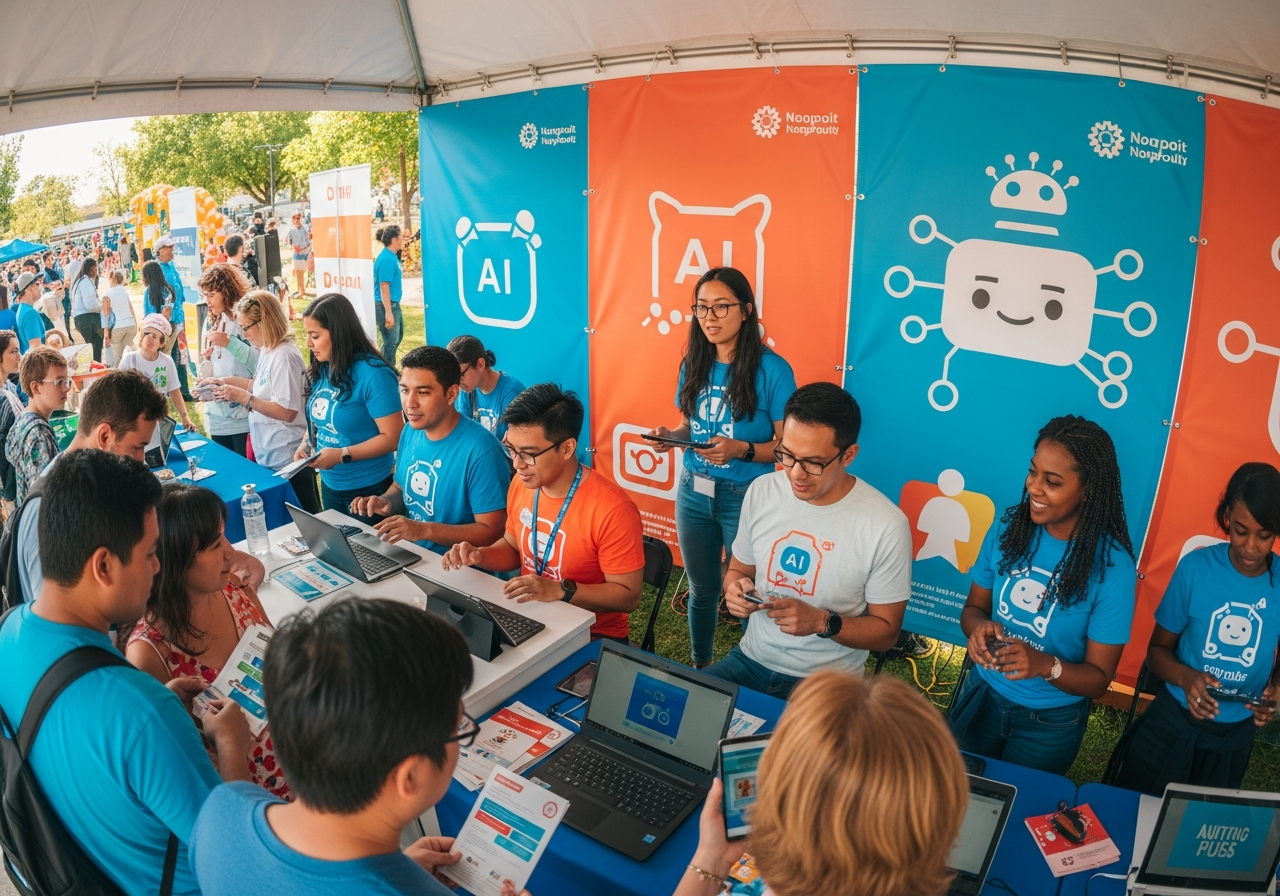
Key Highlights
-
Nonprofit organizations are increasingly adopting artificial intelligence to overcome budget constraints and limited staffing.
-
Generative AI is a powerful tool for content creation, while predictive analytics helps with donor management and forecasting trends.
-
Many top AI platforms offer significant discounts or free access specifically for nonprofits, making adoption financially viable.
-
AI can streamline operations by automating repetitive administrative tasks, from donor outreach to board meeting transcriptions.
-
Success with AI doesn’t require an IT department; user-friendly tools are available for non-technical teams.
-
A clear AI strategy focused on a specific pain point, like fundraising or outreach, is critical for successful implementation.
Introduction
Many nonprofit organizations have tight budgets and strict deadlines. This often means people need to spend more time on paperwork and planning. Because of this, the true mission of helping others can sometimes come second. But the answer is not to work longer hours. The answer is to work in a smarter way. Artificial intelligence can help people like you working in nonprofit organizations. It gives you back the time and resources you need. If you are a nonprofit leader who has many administrative tasks, now is the best time to look at what artificial intelligence can do for you. Using the right tools will help you streamline operations. This lets you have a bigger impact and focus more on what is most important—your cause.
The Growing Role of AI for Non-Profits
 The nonprofit world is going through a big digital change right now. Artificial intelligence is leading this shift. Many nonprofit organizations used to focus mainly on social media management. Now, they are starting to use smart technology to get more done and make a bigger difference. This move to use more artificial intelligence is not just a trend. It is needed for these groups to do well and keep up.
For nonprofit organizations, using artificial intelligence gives them an edge over others. AI helps teams do everyday tasks faster, look at data in a simple way, and talk with supporters in a stronger way. All this happens without needing more money. The next parts will talk about why social media and artificial intelligence matter so much to this field and how they are changing the way nonprofit organizations work.
Why AI Matters for Mission-Driven Organizations
For mission-driven organizations, it can be tough to balance office work with running strong programs. When staff need to deal with a lot of details, sometimes the main goal gets lost. Artificial intelligence helps fix this by taking on the many busy tasks that wear people out. It can help write grant proposals and handle donor engagement, so your team has more time.
The main reasons to use artificial intelligence in nonprofit organizations are clear. It can bring more efficiency, help build better connections with donors, and lead to a greater impact. AI tools can look at donor data to see who gives and when. It can make outreach personal, and send thank-you notes. This makes supporters feel valued and your staff does not have to spend hours doing it by hand. Now they have more time to connect with major donors and plan for the future.
In the end, the goal is to get more done without needing more resources. When you let artificial intelligence take care of everyday tasks and share smart insights based on data, nonprofit organizations can use resources in a smarter way. This gives you the chance to grow and reach more people. With AI, your mission can have a greater impact.
Shifting Trends: Digital Transformation in Non-Profits
The shift to digital in nonprofits is speeding up. Now, it is about more than just sharing on social media. Many groups are starting to use strong AI tools for their project management, email, communications, and analytics. All this is needed to stay up to date and stay useful in a world that is changing because of new tech.
How can AI be good for nonprofits trying to handle their outreach and messages? AI is able to write and plan your social media posts for you. It can also make email outreach feel more personal and study analytics from your posts or emails. You will get information on what people like to see and read. Instead of guessing what works, you use the data you have to make your outreach better and send the right message right where it needs to go.
With these changes, even small teams are getting to do big things that used to be limited to large companies. By using all these tools, nonprofits get to share often on social media, grow their online group, and pull in new people. They can do all this and still give their workers the time to take on other jobs.
Main Benefits of Implementing AI in Non-Profit Operations
One of the biggest benefits of using AI in a non-profit group is how it can help streamline operations with smart automation. High-volume, repetitive jobs often take up lots of time. With AI, these jobs can be handled by a machine, so your team can work on things that need people. It’s not about getting rid of people, but letting them do work that really matters.
For instance, generative ai can change the way you do email marketing and donor engagement. Your team can use AI to make first drafts for newsletters, fundraising asks, and thank-you emails, instead of starting with a blank page. This way, you keep your messages strong and clear. Small teams can save a lot of time this way.
Here are the big pluses you get in terms of efficiency and effectiveness:
-
Automated Content Creation: Quickly write social media posts, blogs, and parts of grant proposals.
-
Personalized Donor Outreach: Make each message fit a donor’s giving history and the way they engage with you.
-
Simplified Data Analysis: Change tricky data into clear charts and easy-to-use insights.
-
Efficient Task Management: Let AI handle jobs like scheduling or typing in data.
These tools help your non-profit get more out of social media, content creation, and outreach. They also give your team more time to come up with new ideas and work with people.
Core Types of AI Solutions for Non-Profits
 Knowing the types of artificial intelligence is the first thing you need to do if you want to use the right one. For nonprofits, the most useful kinds are generative ai and predictive analytics. When you understand the difference, you can choose the best tool for each job. This helps you get real value for the money you spend.
Generative ai is there to help you be creative. It can make new things, like social media content or grant stories. Predictive analytics works like a smart helper. It looks at past data and helps you see what could happen in the future, such as donor trends. Next, we will talk about how the two ai models can fix real-world problems in your organization.
Generative AI for Fundraising, Marketing, and Content Creation
Generative AI is changing the way nonprofits do content creation. This tool looks at a huge amount of data and then makes new and original content. If your team is busy and there’s too much to do, generative AI can help you with fundraising, marketing, or grant writing.
Many nonprofits are now using AI for things like fundraising or taking care of donors. For example, it can send out personal thank-you emails for each gift amount. It can also help with how to talk to people who have given before, making messages warmer and more direct. This kind of personal touch brings people closer to your group, and it does not add extra work to your team.
Here are some simple ways you can use generative ai:
-
Grant Writing Assistance: It can help make first drafts of your grant proposals and give you clear answers for your needs.
-
Marketing Content: You can make social media posts, blog articles, and email newsletters that get your message across.
-
Campaign Brainstorming: It helps come up with fresh ideas for fundraising, events, or ways to reach more people with your outreach efforts.
-
Donor Communications: It lets you draft thank-you notes or fundraising messages that feel different for each person.
Using these tools, your nonprofit can work better, save time, and give each donor or supporter a better social media or email experience. This means you will keep up with the work and be more creative with content creation.
Predictive AI for Donor Management and Impact Analysis
While generative AI creates, predictive AI anticipates. This type of AI analyzes your historical data to forecast future outcomes, turning raw information into actionable insights. For nonprofits, this is invaluable for strategic donor management and proving your impact to funders. It helps you identify who is most likely to give, when they might give, and how to best approach them.
Some of the best AI tools that non-profits can use to save time and improve efficiency fall into this category. Platforms like DonorSearch AI use predictive modeling to score and segment your donor base, highlighting high-potential prospects for major gifts. This data-driven approach ensures your fundraising efforts are focused where they will have the most impact, saving time and increasing your return on investment.
Automation and Outreach Tools Tailored for Non-Profits
Automation tools help nonprofits run better. These tools take care of the small, everyday administrative tasks that can slow your team down. This means you get more time to work on what really matters. These automation platforms connect the tools you already use, like your CRM and email, so you get smooth workflows for your outreach efforts.
For example, you might use Zapier to pull a new contact from your website form straight into your CRM. After that, it sends a welcome email for you. This setup takes away the need for manual data entry. It also makes sure each person gets a fast follow-up. Otter.ai can record your board meetings and give you action point summaries. With this, you do not miss anything important. This is how AI makes it easier for a nonprofit. It takes care of communications and outreach, making life less hard for your team.
Here are some good ways nonprofits are using automation:
-
Automated Follow-ups: Send thank-you emails right after someone donates.
-
CRM Integration: Update your contact info across every platform, so you have one place to look.
-
Meeting Transcription: Record board meetings or talks with stakeholders and get them written out.
-
Social Media Scheduling: Set up your social media content to go out when you want and save time later.
Practical Strategies to Launch AI Projects with Limited Technical Experience
You don’t need a group of developers to start using artificial intelligence. Many of the best AI tools are made for people who are not tech experts. These tools come with easy-to-use interfaces and simple workflows. The most important thing is to make an AI strategy that helps you solve one main problem before you think about doing more.
Start by picking out a big problem in your daily work. This could be tasks like grant writing, talking to donors, or social media management. Next, look for AI tools that come with a free trial so you can try them out first. With the right steps and some training, any nonprofit can get started with artificial intelligence the right way. The next parts will give a step-by-step guide to help you get going.
Step-by-Step Roadmap for AI Adoption in Small Organizations
For a non-profit group with no tech skills, starting with AI can seem tough. But having a clear plan can help you handle it. First, find one important job that takes a lot of your time. Are you always busy making newsletters? Is managing your social media a lot to take on? Pick just one thing that you want to get better at.
Then, look for an AI tool that is easy to use and made for that task. Find software that has simple templates, clear lessons, and good customer help. Some tools, like Canva or Buffer, add AI features in ways that feel normal if you have used those before. When picking, make sure the ai tool will fit your brand voice and goals.
Before you decide to keep the tool, try out the free trial and use it to do your real work. Using your own project is the best way to see if it really saves you time and makes your results better.
-
Identify a Pain Point: Choose one job you do again and again to use AI for.
-
Select a User-Friendly Tool: Look for software with clear support and templates.
-
Utilize the Free Trial: Try the tool on one of your true jobs.
-
Measure the Impact: Use analytics to check if the tool helps you save time or get better results.
Conclusion
Unlocking AI for non-profits is not just a trend. It is a big step that can help your group be more efficient and reach more people. As we have seen, using AI can streamline operations, improve how you handle donors, and make outreach efforts better. These things are very important for organizations that want to make a difference.
Even if your team does not know a lot about tech, you do not have to be afraid to get started. There are simple ways and help out there to help you use AI the right way. Non-profits can use AI to work better, reach goals, and move forward.
Now is a good time to act. Think about how AI can change your non-profit for the better. If you want help that is just for you, try reaching out and setting up a talk. This can help open up new ways to use AI in your work.
Frequently Asked Questions
Can you give examples of successful AI adoption by non-profits?
Today, many nonprofit organizations use artificial intelligence to do better fundraising and outreach. Some of them use predictive AI. It helps them find people in their database who might be big donors. Other groups use generative AI. It helps them make personal appeals and write social media content. This way, they get more people involved and run their campaigns in a better way.
What challenges might US-based non-profits face when implementing AI—and how can they overcome them?
The biggest problems are often not enough money, worries about data privacy, and not having the right skills. Nonprofits can get past these in a few ways. They can start by using free or discounted tools. They should make a clear ai strategy and focus on one problem at a time. It also helps to have transparency with stakeholders. At the same time, they can invest in project management platforms that are easy to use.