Key Highlights
-
Chatbot vs. AI Voice Agent? An AI chatbot is a scripted tool for simple, text-based queries, while an AI voice agent handles complex issues autonomously through voice.
-
The primary difference lies in their capabilities; voice agents use advanced natural language processing for decision-making, unlike chatbots.
-
Voice agents provide a superior customer experience for complex customer support needs, which can be a significant competitive advantage.
-
Chatbots excel at routine tasks like answering FAQs, but AI voice agents are built for nuanced, multi-step resolutions.
-
Your choice depends on support complexity; simple tasks suit an AI chatbot, but scaling requires a sophisticated AI voice agent.
Introduction
Picking between an AI chatbot and an AI voice agent is a big choice for any business that wants to improve customer engagement. Many people mix up these terms, but they are not the same. A chatbot uses scripts to reply to users. An AI voice agent can think on its own and make choices. Knowing the difference between them is important. It helps you choose the right tool for your support team and gives your customers what they need.
Understanding Chatbots and AI Voice Agents
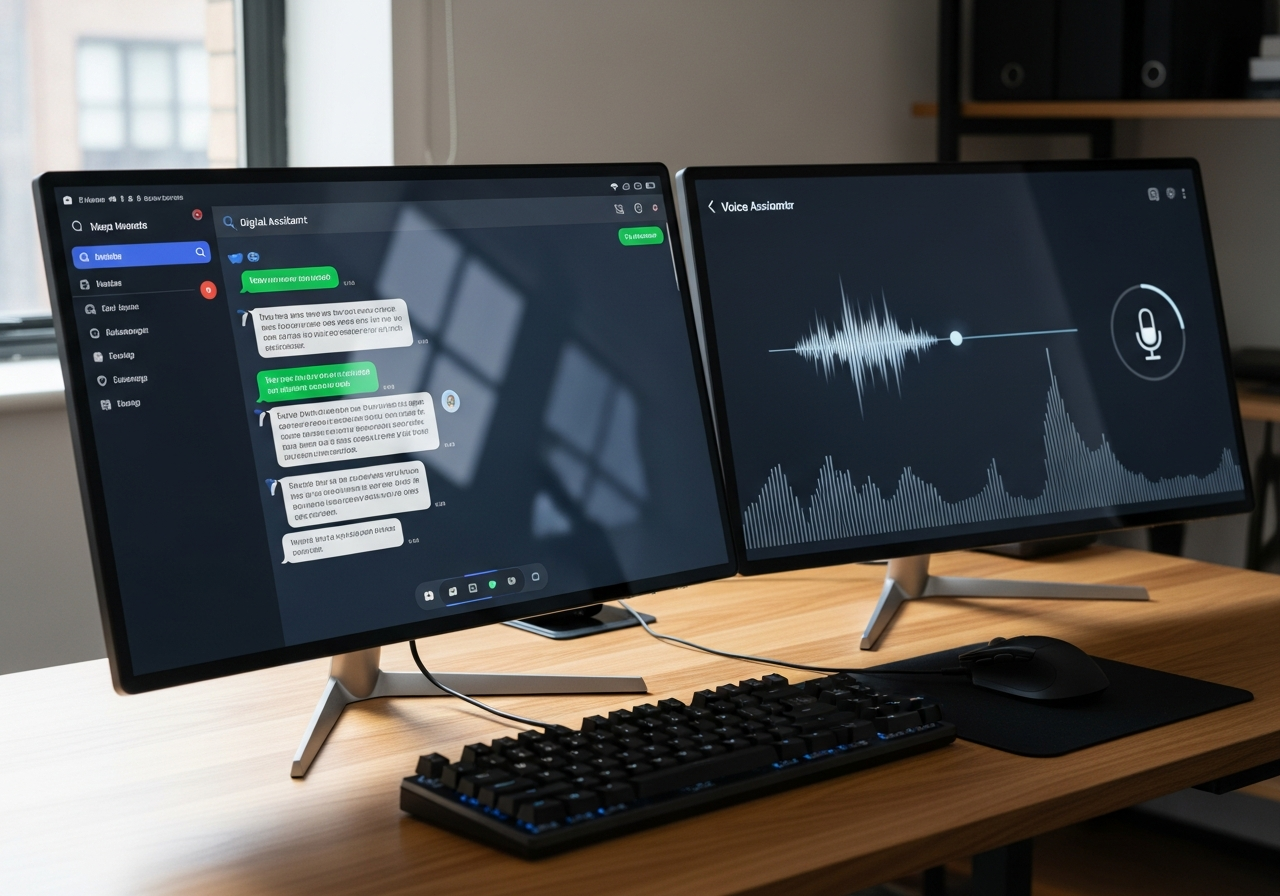 Understanding the main ideas of an AI chatbot and an AI voice agent is key if you want to choose the best customer service tool for your business. Both use artificial intelligence, but what they do and how they affect people are not the same. An AI chatbot is a computer program made to have written conversations that follow a script.
On the other hand, an AI voice agent is more advanced because it works with spoken language. It makes use of natural language processing so it can handle hard tasks or answer questions without people stepping in. This kind of agent deals with conversations that do not follow a set script and it can talk back and forth like a real person. In the next sections, we will look at what makes them different and how each one works in customer service.
What is a Chatbot? Core Features and Use Cases
An AI chatbot is a tool that works with generative AI to help with simple tasks. It does this by following set scripts and rules. In customer service, the AI chatbot mainly handles text talks. It uses natural language processing to get what the user wants when dealing with basic customer queries. But, the answers given by basic chatbots can sound too robotic and are often limited. They often cannot handle anything except the most routine questions.
These basic chatbots do not make choices on their own. When there are complex issues, people will need human agents for help. This can sometimes make customers feel upset. Because of that, a chatbot is only good for simple customer service work.
You might see a chatbot used to:
-
Answer common questions with the help of a knowledge base and clear scripts.
-
Give order status updates for routine orders.
-
Help users with simple actions, such as how to change a password.
-
Send customer queries to the right place or department.
Defining AI Voice Agents and How They Work
An AI voice agent is an advanced system that can make choices and solve complex issues on its own, without people needing to step in. You can think of it as being much more capable than a chatbot. Where chatbots need someone to write scripts, an AI voice agent can handle many steps in a voice chat and can decide things that seemed too hard for AI before. This voice AI helps create a better customer experience because it lets conversations feel more natural.
The technology behind these voice agents is smarter and uses a few main abilities to help keep voice interactions smooth. Telephony integration lets them fit into phone systems that are already there, making the user’s time easier.
Key technologies include:
-
Real-time speech recognition, which listens and changes what you say out loud into text.
-
Large language models (LLMs), which help the system figure out and understand what people say.
-
Natural language understanding (NLU), which gets the meaning and context from a customer’s voice.
-
Machine learning, which studies data to make better choices over time.
Key Differences Between Chatbots and AI Voice Agents
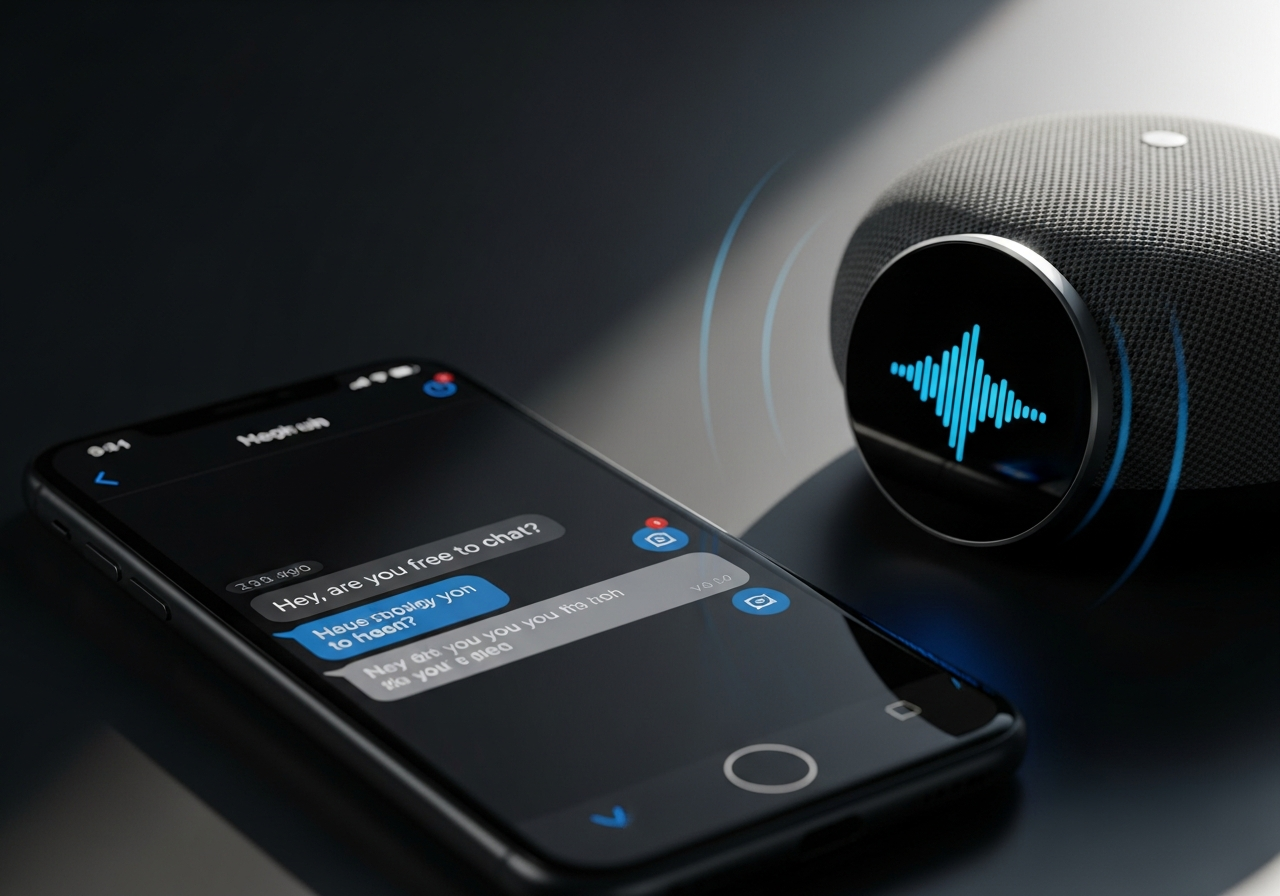 The main difference between a chatbot and an AI agent is clear. A chatbot works by following set scripts. It cannot make its own choices. An AI agent can decide what to do on its own. You can think of a chatbot like a new worker. This worker needs someone to watch over them, especially with tough jobs. An AI agent, on the other hand, is like a skilled worker who can take on big tasks from start to end without help. This change is important for customer support teams. They want to do more than just handle easy jobs and use more automation.
This gap in what they can do has a direct effect on customer experience. Both the chatbot and the AI agent use natural language to talk with people. But an AI agent can understand the context and those small details in a chat. This means each customer support talk feels more tailored and helpful to the customer. Up next, we will look at how the way they talk and the way the user feels about them are not the same.
Communication Style: Text vs. Voice Interactions
The main thing that sets chatbots and voice systems apart is how people give input. With chatbots, you need to type out what you want to say. That takes your eyes and hands and is not always fast. Text works well for quick questions, but it gets slow and hard when you have complex issues. It also makes the talk feel stiff and less personal.
Talking, or using your voice, is different. It goes at the way people usually speak. You can talk while doing other things. This helps people, like when they are driving or need extra help, to still get answers. Voice lets you give details fast and clear things up in real-time, which makes it much easier for hard questions.
The way these methods work really changes the customer experience. Both use natural language processing to understand what people say. But only voice shares feelings like how urgent or what mood someone is in by how things are said. Text can’t do that. If a support team wants to connect better and fix problems even faster, voice is the way to go since it helps build real contact with people.
User Experience and Accessibility Considerations
Many people find that chatbots do not meet customer expectations in customer service. Even though the technology has improved, a lot of users still link chatbots to long wait times and getting stuck in confusing loops before they reach a real person. Because of this, plenty of people feel unhappy with the service. This feeling helps explain why most do not want to use chatbots if they can help it.
But AI voice agents offer a different way to help customers that keeps a human touch in the customer service process. These voice agents can catch the tone and how urgent a person sounds. They adjust how they reply based on how the customer feels, which is a big deal for customer satisfaction and user experience. When people feel that they are heard and that the agent understands them, they are more likely to be happy with the help they get. When it comes to accessibility, voice is a good choice.
Consider these points:
-
Voice agents are easier for older adults and those with visual impairments to use.
-
They do not require the user to type, which makes things smoother for people who have trouble with movement.
-
Talking to a voice agent is direct and quick. This helps lower frustration for customers compared to using text menus.
Technology and Capabilities Compared
The technology behind chatbots and AI voice agents is not the same. This leads to different features and uses. Chatbots use basic natural language processing and follow set scripts. They can only do simple, repeated jobs. Their artificial intelligence does not be able to make decisions on its own or learn from new or complex conversations.
AI voice agents use better tech with machine learning, speech recognition, and large language models. This lets them get the context, learn as they talk, and work with tricky topics. The next parts will explain these new tools and how they work together in more detail.
Advances in Natural Language Processing
There have been many new advances in natural language processing. This has created a big gap between traditional chatbots and modern AI voice agents. Traditional chatbots use simple natural language tools to connect keywords to set answers. But they do not really understand what people mean. These chatbots often miss slang, changes in context, or hard sentences. This can cause the chatbot to get things wrong.
Modern AI voice agents use much better technology. They rely on large language models and strong natural language understanding. With these tools, they can get what someone is feeling and what they really want to say. This helps them talk in a way that sounds smooth and more like a real person.
These new features let modern AI voice agents do jobs that old systems could not handle. They can pick up small details in a customer’s problem, find the right data, and come up with a clear answer that fits the situation. The growth of natural language skills is much faster in voice agents. This makes them a better choice for the years to come.
Integration with Other Business Systems
A system’s value is often determined by how well it integrates with other business systems. Chatbots typically have simpler integration needs, often deploying as widgets on websites or within mobile apps. Their function is usually standalone, providing information from a knowledge base without interacting deeply with core business logic.
AI voice agents, however, are designed for deep integration. They connect with CRMs, help desks, and other enterprise platforms like Salesforce and Zendesk. This telephony integration allows them to replace outdated IVR systems and act on customer requests in real time, such as processing a refund or updating an account. They don’t just provide information; they execute tasks.
This ability to read from and write back to your core business systems is a game-changer. It ensures all interactions are logged, data remains consistent, and the agent has the full context of the customer’s history.
|
Feature |
Chatbot Integration |
AI Voice Agent Integration |
|---|---|---|
|
Core Systems (CRM, Help Desk) |
Limited or read-only access |
Deep, two-way integration (read/write) |
|
Deployment Channels |
Websites, mobile apps, messaging |
Phone systems, contact centers, IVR |
|
Task Execution |
Provides information, links |
Takes action, updates records, processes transactions |
|
System Impact |
Adds a digital channel |
Transforms core telephony and workflows |
Comparing Effectiveness in Customer Support
When you look at how good customer support is, you see it is not just about giving a quick answer. The real goal is to fix the problem. Chatbots can help lower the first response time for easy questions. Still, they do not always know what to do with tough problems. This often means the issue gets passed on, and that can take away the time you saved. It also makes customers unhappy if they feel stuck.
AI voice agents work in a different way. They be made to fix issues by themselves while talking with customers. Since they can deal with problems that are not simple, these AI agents fix more problems right away. This helps make things much better for customer satisfaction and support numbers. In the next few sections, you will see how chatbots and AI voice agents affect first response time and customer satisfaction in different ways.
How Chatbots Improve Response Times
Chatbots are known for helping with response time, especially with simple customer queries. They are always on and ready to help, so people do not have to wait for support agents to answer basic questions. This real-time help can be good for businesses that get a lot of the same questions over and over.
But there is a big problem with this. Basic chatbots can only answer a small range of issues. If a question is not something the chatbot knows, it cannot help. The “quick” answer leaves the customer stuck. At that point, the chatbot has to send the customer to a real person.
So, while chatbots cut down the first wait, they do not really make the total time shorter for anything but the easiest customer queries. This often means support agents must not only deal with hard problems, but they also have to help customers who are already upset from the chatbot.
The Impact of AI Voice Agents on Customer Satisfaction
A voice agent that uses AI helps customer satisfaction because it fixes many of the problems people have with old support systems. The real problem is not with AI, but with AI that does not work well. When done right, voice AI gives you a more personal and smoother time. That helps build trust between people and a company.
A good AI voice agent can take care of complex issues by itself, so you spend less time waiting or getting passed to human agents. This means you get help quicker, and it makes the customer experience much better. The voice agent can also notice how you sound and answer with kindness. This is important for keeping people happy.
An AI voice agent is good for customer satisfaction because:
-
It can fix the most common problems (up to 80%) without any human intervention.
-
It cuts down wait times so people are not put on hold for long.
-
Customers get the same, clear help any time of day.
-
It only calls a human agent if you really need one.
A voice agent like this changes the way we get customer support. It gives customers the experience they want—fast, easy, and friendly.
Which Platform Converts Customers Better?
The question about whether a chatbot or an AI voice agent converts better depends on how good the customer engagement is. A simple chatbot can be good for lead qualification on a website. It may ask for a name and email, but it does not have the skill to help someone with hard choices.
This is where an AI assistant, like a voice agent, does well. It can talk with people and help answer their hard questions. It can learn more about what people want, help them make the right pick, and build trust. This can help close more sales or get a strong “yes.” The next parts will look at how often each tool gets people to act, and how each deals with the hard questions that often come before someone says yes.
Engagement Rates of Chatbots vs. AI Voice Agents
Engagement rates for chatbots often go up and down. Many people say they will use a chatbot to save time instead of waiting for a person, but not many actually do. There is a gap between what people expect and what they get. Chatbots do not usually meet customer expectations. The answers are stiff, and customers may get stuck in never-ending loops. So, people get frustrated and leave before their problem is solved.
Today, modern platforms that use AI voice agents show much higher engagement. Talking feels more real for people. It is also more friendly and personal. This keeps customers on the line and helps them stay until their issue is taken care of. People do not need to type in a box. They can just say what is wrong, which makes the customer experience better and helps to build trust.
Here are the main things that affect engagement rates:
-
Interaction Quality: Voice sounds more human and less like a robot.
-
Resolution Capability: AI agents can solve problems, but chatbots often just push them away.
-
Customer Effort: When the issue is complex, it is faster and easier to talk than to type.
-
Trust: People trust the system more when they feel like it understands them.
Handling Complex Inquiries: Text vs. Voice Solutions
When you deal with complex issues in customer support, text chatbots often do not do the job well. These chatbots can only follow simple, straight paths set by their script. If a customer’s problem needs many steps, needs the system to know the situation, or needs troubleshooting, the chatbot cannot handle it. In the end, the chatbot will not solve the problem, and this makes the customer upset.
Voice interactions with an AI voice agent work much better for complex issues. The way people talk lets the customer share more details about their problem. The AI voice agent can ask questions if it needs more information. It can change how it works to fit the problem as the customer talks. It also can handle, in real time, many steps that would be too hard in a simple text chat.
If you have a customer support operation that gets questions deeper than basic FAQs, you need to look at a voice solution. An AI voice agent is important because it can solve these complex problems on its own. This makes things faster and helps keep customers loyal to your service.
Use Cases: When to Choose Each Solution
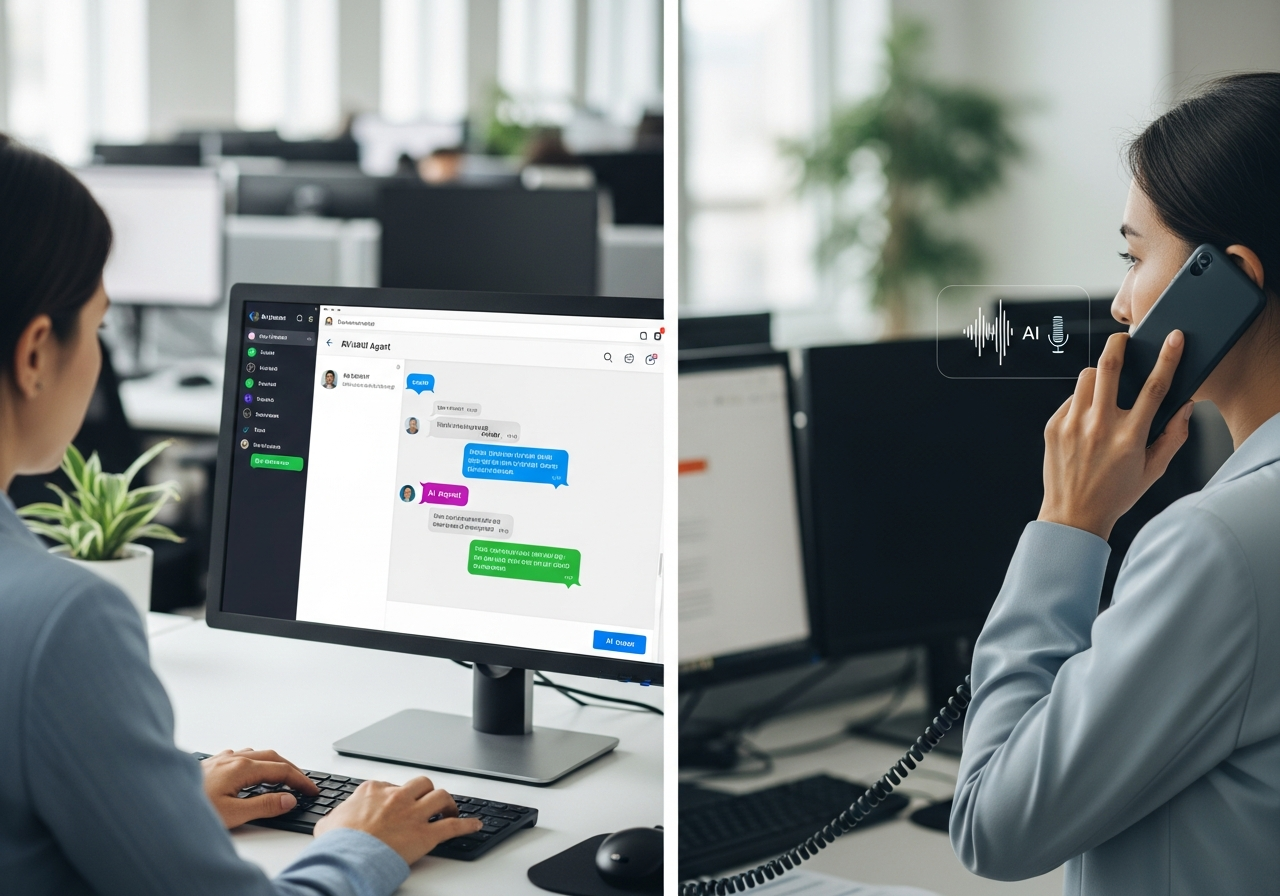 Choosing the right solution comes down to your use case in customer support. It is not about asking if a chatbot or a voice agent is always better. Instead, you should pick what fits your need. Think about how complex your customer queries are. Also, consider what you want for your support in the long run.
If your team needs to get started with simple tasks, a chatbot could be enough. But, if you need to handle complex issues and want to grow your support, then an AI voice agent is the better choice. It will work well for businesses that use their main business logic in support.
In the next sections, we will talk about when it is best to use each type of technology.
Best Scenarios for Deploying Chatbots
Chatbots have their place, but that place is pretty small. They work best when you use them for simple tasks that come up again and again. If a job follows a set pattern, you can put a chatbot on it. This makes things faster, since a chatbot can give instant answers. It also lets human agents focus on tough work or problems. So, the big value of chatbots is in doing a lot of easy jobs quickly.
A good example is when you set up a chatbot on a website to help with lead qualification. The bot can grab a visitor’s name and email with a short form. It can also give quick answers if someone asks questions that are in a knowledge base. Sometimes, it can help with simple tasks in financial services, but that should be kept to the most basic ones.
The best times to use a chatbot are for:
-
Answering questions people ask a lot (FAQs).
-
Telling people about their order status.
-
Booking a basic appointment for non-serious needs.
-
Sending users to the right page or department.
Ideal Use Cases for AI Voice Agents
AI voice agents do well in places where talking with people and solving their problems can change how a business does. They are great for answering inbound phone calls at enterprise contact centers. These are times when customer problems are hard and often come with a lot of feelings. AI voice agents can handle tricky, multi-step problems by themselves. They do not have to send everything to a support team, which often happens with simple chatbots.
AI voice agents matter most when things are important. They are best for technical support, sales talks, and answering questions about accounts that need care. In these moments, how the agent gets the point, uses a caring voice, and gives a right answer helps people trust the company and want to stay with them. If you do a detailed comparison, you will see they are better any time you need more than just a script.
Here are some ideal ways to use an AI voice agent:
-
Manage many inbound phone calls, day and night.
-
Solve complex issues and help with technical support.
-
Run sales talks or bring in new clients.
-
Automate jobs with more than one step, like handling claims or checking transactions.
Conclusion
In the end, picking between a chatbot and an AI voice agent comes down to what your business and your customers need. Chatbots are good if you want fast answers to a lot of questions. AI voice agents are better when your customers have complex issues that need a more personal touch. If you know the small differences between a chatbot and a voice agent, it will help raise customer satisfaction and keep more people coming back.
Take time to look at what your business and your users need. Think about user experience, how easy it will be to use, and how you can make it work with your other tools. This way, you will get the right answer for you and your team, and your customers will have a better time as well. If you’re not sure about what to choose, you can always get help from a pro who knows about AI voice agent solutions and how they help with customer satisfaction on complex issues and more.
Frequently Asked Questions
Can you use chatbots and AI voice agents together?
Yes, you can use an AI chatbot and a voice agent at the same time for your plan. For example, an ai chatbot can help people with basic questions on your website. If customers have complex issues, they can switch from the chatbot to talk with an ai voice agent. This setup helps your business systems and phone platforms work together. It will also help lower your operational costs.
Are AI voice agents more user-friendly for seniors than chatbots?
Yes, AI voice agents are usually more easy to use for older people. The way they can just talk and use their own words feels more simple than typing or going through lots of menus. This makes it better for them to use and raises the overall user experience. Since lots of seniors are used to talking on the phone, they often have better customer satisfaction when they use these voice agents, especially if they find other types of tech hard.
Has AI voice agent technology advanced faster than chatbots recently?
Yes, AI voice agent technology is moving ahead fast. Big steps in natural language processing, large language models, and speech recognition help new AI voice agents do much more now. These voice agents are not like the old chatbots. They can make their own decisions and talk to you in a real, human way because of strong artificial intelligence.